


© Stadt Bocholt
City museum shows hairdressing tools from the 19th centuryCity museum presents Onduli scissors as object of the month
Historical hair styling tools // Technology and application before electrification // Social significance of hair fashion around 1900
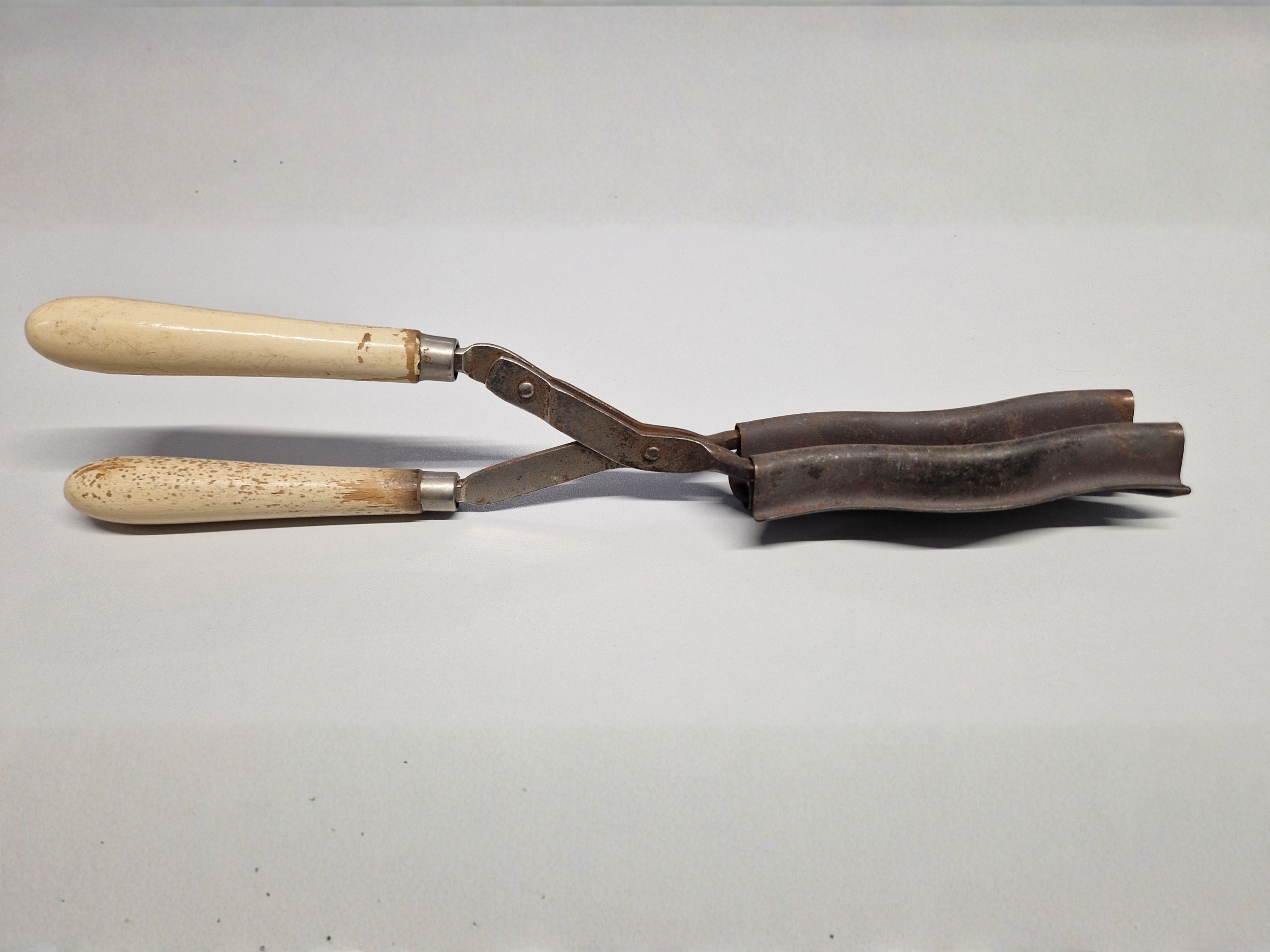
In its "Object of the Month" series, the Bocholt City Museum is currently presenting a pair of historical ondulating scissors. In the late 19th and early 20th century, the tool was used to create waves or curls from strands of hair using heat.
At first glance, this object looks almost like a pair of scissors. However, they were not used to cut hair, but to shape it. The ondulating scissors, also known as burning shears or waving tongs, were used to curl or wave strands of hair with the help of heat. Before use, the metal jaws were heated, for example on the cooker, over a flame or with a special burner. The wooden handles protected the hands from the heat. Individual sections of hair were then clamped between the warm mould surfaces. This created carefully laid waves, curls or entire hairstyles.
The application required experience and dexterity. If the iron was too cool, the hairstyle would not hold. If it was too hot, hair could be scorched or the scalp injured. Anyone working with ondulating scissors therefore had to know exactly when the right temperature had been reached. Such devices were used in hairdressing salons, by wig makers and also in the home. They tell of a time when hairstyling required a great deal of patience and skill. Even before electric curling irons were widespread, hair was styled using simple but effective heating tools. The ondulating scissors were used at a time of great change. In the late 19th and early 20th centuries, industrialisation, growing cities, department stores, fashion magazines and photography had an ever-increasing impact on the external appearance. Hairstyles became known more quickly through pictures, advertising and printed models. At the same time, the hairdressing trade gained in importance. Well-groomed and fashionably styled hair became a visible sign of taste, modernity and social affiliation.
Photo: Stadtmuseum Bocholt, Inv. No. 2023/14, Brands collection
© Stadt Bocholt
City museum shows hairdressing tools from the 19th century