


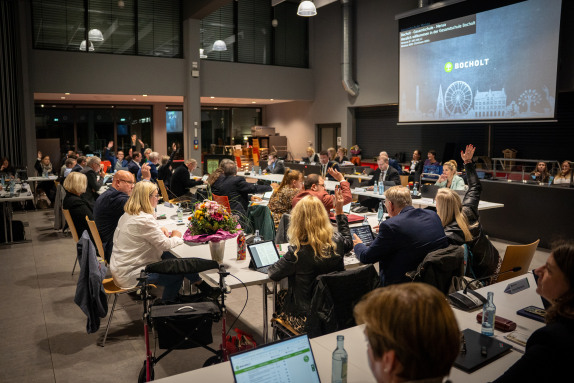
Service for local elected representatives
Welcome, dear elected representatives of the city of Bocholt!
Politics is more than just a matter for rulers and elected officials - it depends on the commitment of all citizens in the municipal committees. As representatives of our community, you play a decisive role in the democratic process of our city.
Bocholt city council endeavours to strengthen and support your voluntary political commitment. On these pages we offer a variety of services and information to help you in your important work:
- Resources for elected officials: find important documents, guidelines and information to help you carry out your mandate.
- Support and advice: Our team from the municipal meeting service is available to support you with any questions or concerns you may have.
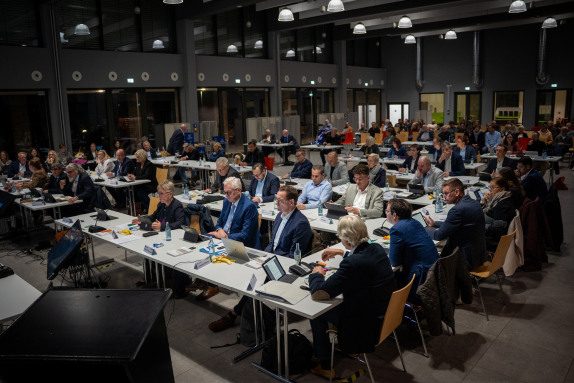
Information for council and committee members
The committees of the City of Bocholt are made up of different groups of people in order to combine democratic legitimacy, expertise and social representation. A distinction is made between elected and appointed mandate holders, who are assigned to the groups of people shown below:
1. city councillors
City councillors are the members of Bocholt City Council who are directly elected by the citizens. The legal basis is the North Rhine-Westphalia Municipal Code (GO NRW). In Bocholt, the council is known as the "Stadtverordnetenversammlung", and its members are accordingly known as "Stadtverordnete" or "Stadtverordneter".
They fulfil central political tasks, decide on fundamental issues of local self-government, approve budgets and monitor the administration. City councillors therefore bear the main political responsibility for the development of the city. The municipal council is not only the central political decision-making body, but also an essential administrative body of local self-government.
2 Elected members of the Committee for Equal Opportunities and Integration
This committee has a special composition in accordance with Section 27 GO NRW: It is made up of two groups - the councillors delegated by the council and the directly elected members.
The latter are regular committee members who - in contrast to delegated persons or appointed experts - are legitimised through an election. Section 6 of the annex to Section 7 (2) of the main statutes of the City of Bocholt regulates who is eligible to vote in this election. The elected members work democratically on the basis of the election results and bring the perspectives of people with a migration biography directly into the committee's work.
3 Expert citizens
Expert citizens are people who live in Bocholt and are not members of the Council, but who are nominated by a Council parliamentary group on the basis of their expertise or commitment and subsequently elected by the Council.
They have full voting rights in the respective committee and belong to the so-called extended parliamentary group ( https://ratsinfo.bocholt.de/fraktionen ). Their task is to contribute specialist expertise to political decision-making processes. Due to their broad involvement in many committees, they make up the largest group of elected representatives.
4 Expert residents
In contrast to expert citizens, expert residents do not have to live in Bocholt. They are also appointed on the basis of their particular specialist knowledge, for example if expertise is required that is not available locally.
As a rule, they have no voting rights unless the main statutes expressly stipulate otherwise. They contribute advisory expertise and support the professional quality of the decision-making processes.
5 Special statutory representatives
These persons are not appointed on the basis of political decisions, but are prescribed by special legislation. Their membership of certain bodies is a binding requirement under statutory regulations, e.g. the German Social Code.
A typical example is the representatives of independent youth welfare organisations on the Youth Welfare Committee in accordance with Section 71 SGB VIII. The number, election mode and participation rights are prescribed by law and cannot be freely organised by the local authority.
6. other
This category includes all other members whose participation is not by election, council delegation or special legal requirements. They are appointed on the basis of statutes, agreements or special regulations.
These include, for example, representatives of certain organisations, institutions or persons who only have an advisory function and have no decision-making powers. This group is heterogeneous and depends on the individual requirements of the respective bodies.
1. duty of disclosure
In accordance with Section 43 (3) of the NRW Municipal Code in conjunction with the City of Bocholt's Code of Honour dated 27 March 1995 (last amended on 11 June 2025), council and committee members must provide the mayor with information insofar as this may be relevant to the performance of their duties on the council and committees (e.g. memberships in accordance with Section 7 of the Corruption Prevention Act). Based on this information, a possible conflict of interest should be recognised in good time so that any unlawful involvement of a person concerned can be prevented as far as possible.
By resolution dated 12 November 2025, the City Council also adopted a " Code of Conduct for elected representatives and electoral officials of the City of Bocholt". This is intended to strengthen the basic principles of integrity, transparency and independence in local self-government.
It provides elected representatives and electoral officials with binding guidance for responsible behaviour and supplements legal requirements. The code specifies requirements regarding transparency, conflicts of interest, donations and the handling of confidential information. It is also intended to raise awareness of potential conflicts. The basis for its development was the model code of Transparency Germany (2022), adapted to the specific conditions of the city of Bocholt.
2. reimbursement of expenses
Members of the City Council receive an expense allowance in the form of a monthly lump sum and an attendance fee in accordance with the Compensation Ordinance for attending council, committee and parliamentary group meetings.
As an expert citizen, you will receive an attendance fee of € 52.00 for attending committee and parliamentary group meetings and for attending other meetings specified in the main statutes in accordance with Section 45 (4) No. 2 GO NW in conjunction with Section 2 No. 1 of the Compensation Ordinance.
3. loss of earnings
As an expert citizen, you are entitled to compensation for the loss of earnings that you incur as a result of exercising your mandate in accordance with § 45 GO NW, insofar as this is necessary during regular working hours.
Regular working hours must be determined on an individual basis.
Loss of earnings is not only granted for participation in committee meetings, but for all activities arising from the exercise of the mandate. This also includes, for example, parliamentary group meetings that serve to prepare council and committee meetings, as well as other activities for the municipality approved by the council, participation in meetings, visits or travelling.
In accordance with Section 45 (2) GO NW in conjunction with Section 15 of the main statutes, council and committee members who have incurred a loss of earnings receive at least the standard hourly rate. The standard hourly rate corresponds to the amount of the minimum wage in accordance with the Minimum Wage Act of 11 August 2014 (Federal Law Gazette I p. 1348), as amended. The compensation for loss of earnings may not exceed a maximum amount of 84.00 euros per hour.
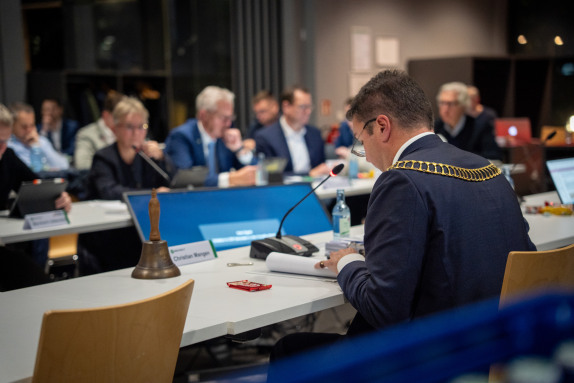
Forms of loss of earnings
Employees
Dependent employees can apply for compensation for the actual and proven loss of earnings instead of the standard hourly rate.
As a rule, a certificate from the employer stating the regular daily working hours and the remuneration per hour is sufficient. Regular working hours do not include flexible working hours or flexitime. The certificate must be submitted to my office.
There are also no objections to the loss of earnings compensation being settled with your employer. The prerequisite is that your employer is authorised to make deductions from your salary or remuneration for the loss of working hours due to your work as a knowledgeable citizen and does so. You would also have to assign your claims to your employer.
Self-employed
Upon application, self-employed persons receive an amount of 10 euros for each hour of regular working time that they attend a meeting or similar. In the case of the last hour or part thereof, however, the calculation is only made up to the end of the last half hour or part thereof.
Instead of this standard hourly rate, the self-employed person can receive a higher lump sum for loss of earnings, which is determined on a case-by-case basis on the basis of the credible income provided. As a rule, it is sufficient for you as the applicant to provide credible evidence of the amount of your income on the basis of suitable documents (income tax assessment notice).
Household members
Persons who
1. lead a household with at least two persons, at least one of whom is a child under the age of 14 or a person recognised as being in need of care in accordance with Section 14 SGB XI, or lead a household with at least three persons and
2. are not employed or are employed for less than 20 hours per week, receive at least the standard hourly rate for the period of absence from the household due to the mandate if they cannot adequately catch up on their housework at another time. Instead of the standard hourly rate, the necessary costs for a replacement in the household will be reimbursed upon request.
If paid childcare is necessary during the absence from the household due to the mandate, the proven costs will be reimbursed on request. However, they will not be reimbursed for periods for which loss of earnings is already being paid.
The maximum amount for compensation for loss of earnings in accordance with Section 45 (7) sentence 1 no. 1 of the Municipal Code for the State of North Rhine-Westphalia is 84 euros.
The expense allowance and compensation for loss of earnings are paid by the middle of the following month.
Frequently asked questions
How high is the loss of earnings?
§14 Compensation for loss of earnings
Council and committee members as well as members of advisory councils and working groups are entitled to compensation for loss of earnings incurred as a result of exercising their mandate, insofar as this is necessary during working hours. The exercise of the mandate includes activities that are directly related to the mandate or are carried out at the instigation of the Council or the committee. Activities as a representative of the City of Bocholt delegated by the Council in bodies and committees of legal entities and associations under public and private law are also carried out at the instigation of the Council. Loss of earnings is also granted for participation in local political educational events in accordance with Section 44 (3) GO NW. The loss of earnings is calculated for each hour of missed working time, however, in the case of the last hour or part thereof, the calculation is only made up to the end of the last half hour or part thereof.
The entitlement is compensated as follows:
(a) All council and committee members shall receive a standard hourly rate, unless it is evident that they have not suffered any financial disadvantage. The standard hourly rate is set at the level of the minimum wage in accordance with the Minimum Wage Act of 11 August 2014 (BGBI. I p. 1348), as amended. A financial disadvantage arises if core working hours are set and the mandate is performed during core working hours. If the councillor or committee member is able to decide on the location and duration of their individual working hours within a specified working time frame, half of the time spent working within this working time frame is to be counted towards the working time. In this case, the entitlement to loss of earnings is limited to this half.
b) Employed persons may apply for compensation for loss of earnings in excess of the standard hourly rate on presentation of appropriate evidence, e.g. a certificate from their employer.
c) Self-employed persons may receive a special lump sum for loss of earnings per hour, provided that they can credibly demonstrate a loss of earnings in excess of the standard hourly rate. The credible evidence is provided by a written declaration of the amount of income in which the accuracy of the information provided is assured.
d) Persons who
1. lead a household with at least 2 persons, at least one of whom is a child under the age of 14 or a recognised person in need of care in accordance with § 14 SGB XI, or lead a household with at least three persons and
2. are unable to work or are able to work less than 20 hours per week, receive at least the standard hourly rate for the period of absence from the household due to the mandate. Upon application, the necessary costs for a replacement in the household will be reimbursed instead of the standard hourly rate. Payment of the reimbursement of costs for household work is limited from Monday to Friday from 8.00 am to 7.00 pm and on Saturdays from 8.00 am to 2.00 pm.
3. paid childcare costs that become necessary outside of regular working hours due to absence from the household as a result of the mandate will be reimbursed upon request in the amount of the proven costs. Childcare costs will not be reimbursed for children who have reached the age of 14, unless special circumstances of the individual case are credibly proven.
Are childcare costs reimbursed?
§ Section 14 - d) para. 3 of the main statutes of the City of Bocholt:
Paid childcare costs that become necessary outside regular working hours due to absence from the household as a result of the mandate will be reimbursed on request in the amount of the proven costs. Childcare costs will not be reimbursed for children who have reached the age of 14, unless special circumstances of the individual case can be credibly proven.
An application can be submitted by e-mail to the contact persons listed below
How can I download and use the session app?
You can download a detailed guide to installing and using the iRICH app here (click here.)
What should I do if I have forgotten my password?
You can download instructions on how to reset your password here (click here.)
Downloads
- Nutzungshinweise für MandatsträgerInnen - RIM pdf 1,16 MB
- Nutzungshinweise für MandatsträgerInnen - RIM (pdf 1,16 MB) download
- Nutzungshinweise - Kennwort vergessen pdf 681,64 kB
- Nutzungshinweise - Kennwort vergessen (pdf 681,64 kB) download
- iRICH - Leitfaden pdf 7,23 MB
- iRICH - Leitfaden (pdf 7,23 MB) download
- Anleitung Kalendereinbindung pdf 1,03 MB
- Anleitung Kalendereinbindung (pdf 1,03 MB) download
- Verhaltenskodex pdf 275,49 kB
- Verhaltenskodex (pdf 275,49 kB) download
Contact us

Gerlinde Visser
Sitzungsdienst und Internationales
Büro des Bürgermeisters und des Vorstands
Send e-mail
+49 2871 953-1284

Susan Bähring
Sitzungsdienst und Internationales
Büro des Bürgermeisters und des Vorstands
Send e-mail
+49 2871 953-1218
Felix Kuhmann
Sitzungsdienst und Internationales
Büro des Bürgermeisters und des Vorstands
Send e-mail
+49 2871 953-1285
Legal basis
- Hauptsatzung der Stadt Bocholt pdf 261,48 kB
- Hauptsatzung der Stadt Bocholt (pdf 261,48 kB) download
- Korruptionsbekämpfungsgesetz pdf 8,97 kB
- Korruptionsbekämpfungsgesetz (pdf 8,97 kB) download
- Ehrenordnung der Stadt Bocholt pdf 104,16 kB
- Ehrenordnung der Stadt Bocholt (pdf 104,16 kB) download
- Geschäftsordnung für die Stadtverordnetenversammlung der Stadt Bocholt und ihre Ausschüsse pdf 217,80 kB
- Geschäftsordnung für die Stadtverordnetenversammlung der Stadt Bocholt und ihre Ausschüsse (pdf 217,80 kB) download