


© Stadt Bocholt
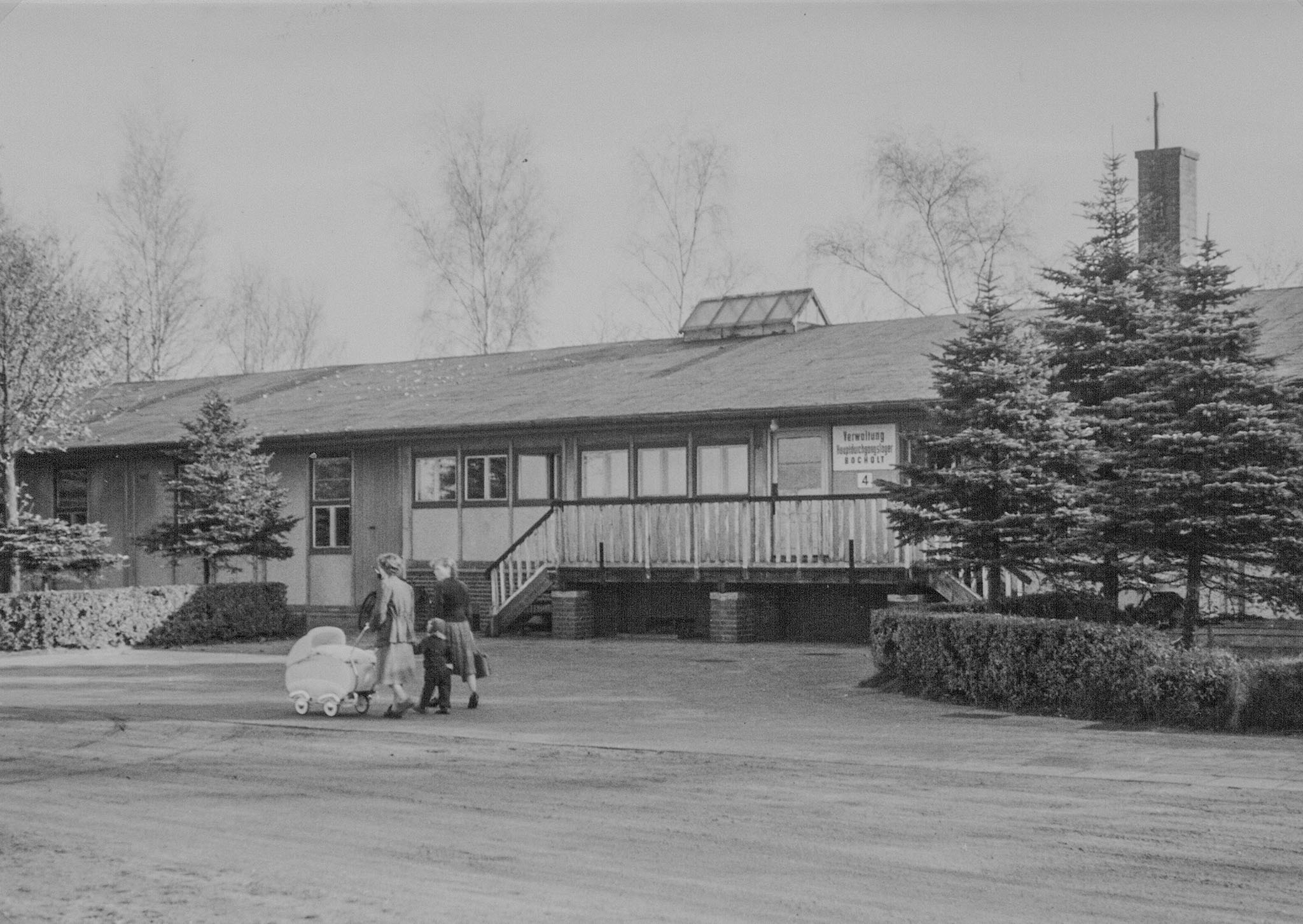
Bocholt city forest camp, November 1955 - Source: Bocholt city archives, picture collection no. 5853Guided tours commemorate displaced persons in the Bocholt city forest camp
Tours on 12 and 25 October shed light on an almost forgotten chapter of the city's history
Until the early 1980s, an extensive barrack camp - the so-called Stadtwaldlager - was located where walkers now stroll through the city forest. After the end of the Second World War, it served as accommodation for refugees from Latvia, Estonia and Lithuania. In addition to over 7,000 Jewish survivors of concentration and extermination camps, numerous refugees from the GDR also found a temporary home there from 1950 onwards.
Two public tours on Sunday, 12 October and Saturday, 25 October, both at 2.30 pm, commemorate this eventful history. The Bocholt local history researchers Josef Niebur and Hermann Oechtering will explain the various uses of the camp in the immediate post-war period and report on the fates of the so-called displaced persons - people who were unable to return to their home countries after 1945 - during the one-and-a-half-hour tours.
"The tours offer an impressive insight into a previously little-known chapter of Bocholt's history and make it clear how closely Bocholt is connected to the aftermath of the war and European refugee history", says Oliver Brenn, Head of Culture and Archives at the City of Bocholt. The guided tours are part of the "Blind Spots" project. This series of events is dedicated to the history of displaced persons in Westphalia-Lippe. These are former forced labourers and concentration camp prisoners who were housed in special camps by the Allies after the end of the war.
There are 38 such camps known in the Westphalia-Lippe region. As part of the project, their history will be explored in a varied programme at the Haltern am See, Bocholt, Bochum, Münster and Soest sites.
Participation in the guided tours is free of charge. Registration is required at www.stadtmuseum-bocholt.de
© Stadt Bocholt
Bocholt city forest camp, November 1955 - Source: Bocholt city archives, picture collection no. 5853