


© Stadtarchiv Bocholt, Nachlass Josef Halbfas Nr. 13
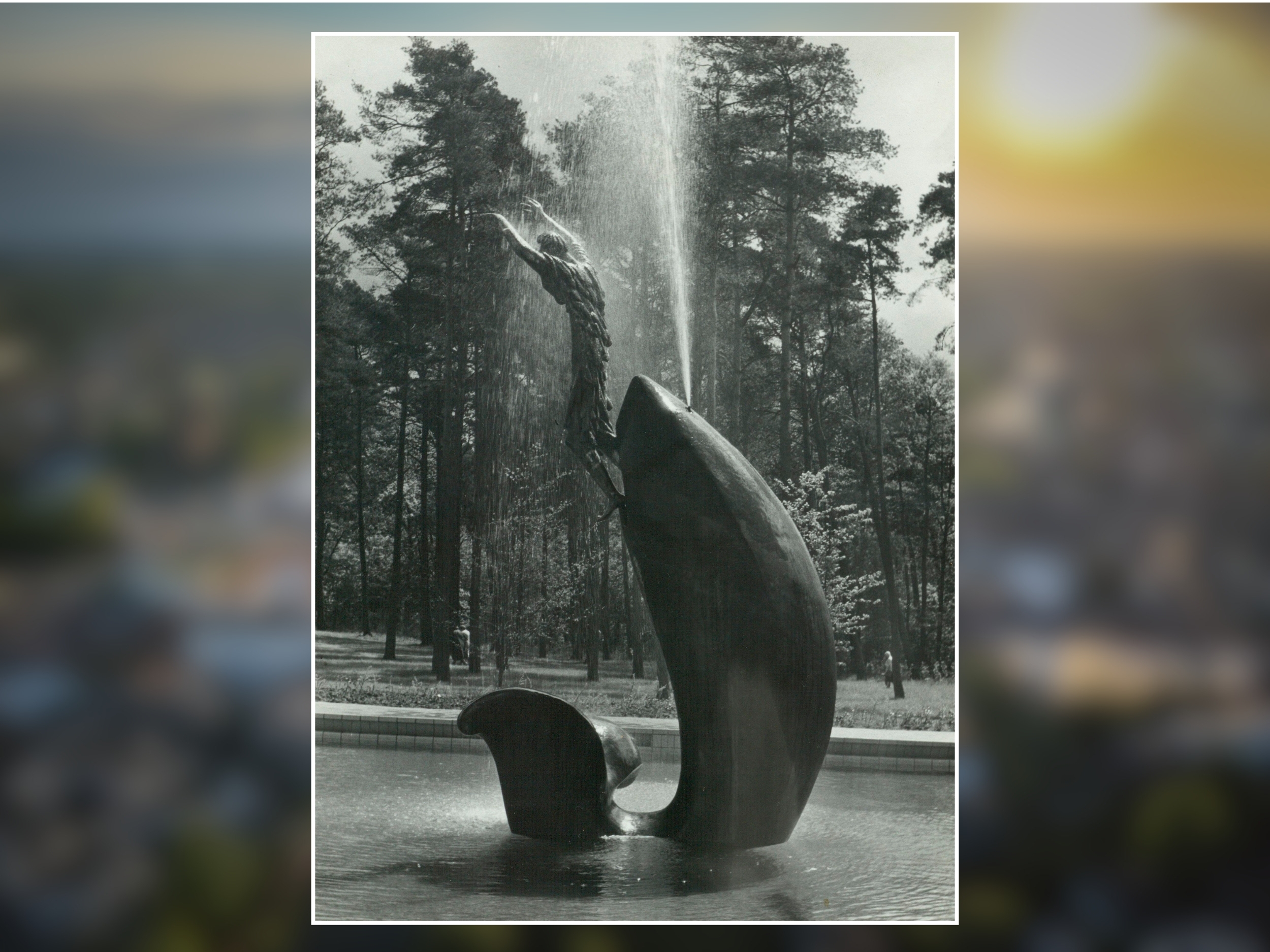
Photo of the month May from the Bocholt city archive.The Jonah sculpture in the forest pool
Photo of the month May // City archive shows photo from the 1980s
The photo of the month is presented once a month by the Bocholt city archive. In May, a well-known Bocholt artwork is shown in an unusual place.
The impressive Jonah sculpture, created by Düsseldorf sculptor Max Kratz, is a striking work of art on the northern shore of what is now Lake Aa. The massive bronze statue now stands on the Aa-See-Terrassen at the new R-Café near the former Königsmühle. With a height of 6.80 metres and a weight of 2.5 tonnes, it is one of the more imposing works of art in the city's public spaces. The sculpture is based on the Old Testament story of St Jonah, who is said to have survived three days in the stomach of a fish or whale during a storm.
It was originally commissioned by Dr Alfred Flender on the occasion of his 60th birthday, who donated the artwork to the city of Bocholt for the grand opening of the Waldbad in 1962. The sculpture was delivered from Düsseldorf on 24 May 1962 and set up in the forest pool on Hemdener Weg on the same day. There it adorned the non-swimmers' pool as a special attraction and characterised the image of the outdoor pool for over 20 years. This photo captures the former scene.
On 2 June 1982, the school and culture committee unanimously decided to move the biblical figure to Lake Aa. The main reason was the allegedly increasing danger of children jumping into the water from the artwork, although this danger had already been considered and ultimately ruled out during the original planning.
The realisation was part of the Aa-See leisure project, which had already begun in 1975. In its new location on the entrance terraces of the lake, the water-spouting sculpture was intended to have an "increased public impact", as committee chairman Dr Becker emphasised, and this is still the case today.
Photo: Bocholt city archive, Josef Halbfas estate no. 13, text: Hendrik Schlaghecken
© Stadtarchiv Bocholt, Nachlass Josef Halbfas Nr. 13
Photo of the month May from the Bocholt city archive.