


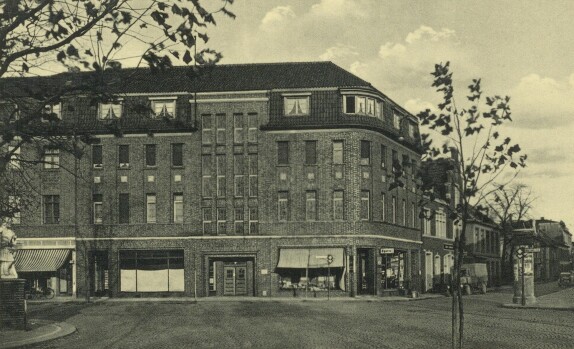
The Mittelstand building on Ravardistrasse
Association of small and medium-sized enterprises
In the very last days of the First World War, on 15 October 1918, the commercial middle class in Bocholt came together to form a central association, which was given the name "Mittelstandsamt".
The primary task of this trade secretariat was to bundle the forces of the industrial and commercial middle class in order to represent their interests to the outside world.
Office that shapes the townscape
Its early members included the Association of United Merchants, Craftsmen and Tradesmen of the city. The first office was set up at Nordstraße 17.
Under the long-standing leadership of chairman Johann Imping (master confectioner), the organisation continued to expand and consolidate. His work culminated in the construction of the large Mittelstandshaus, the foundation stone of which was laid at the end of 1926 and opened on 2 October 1927.
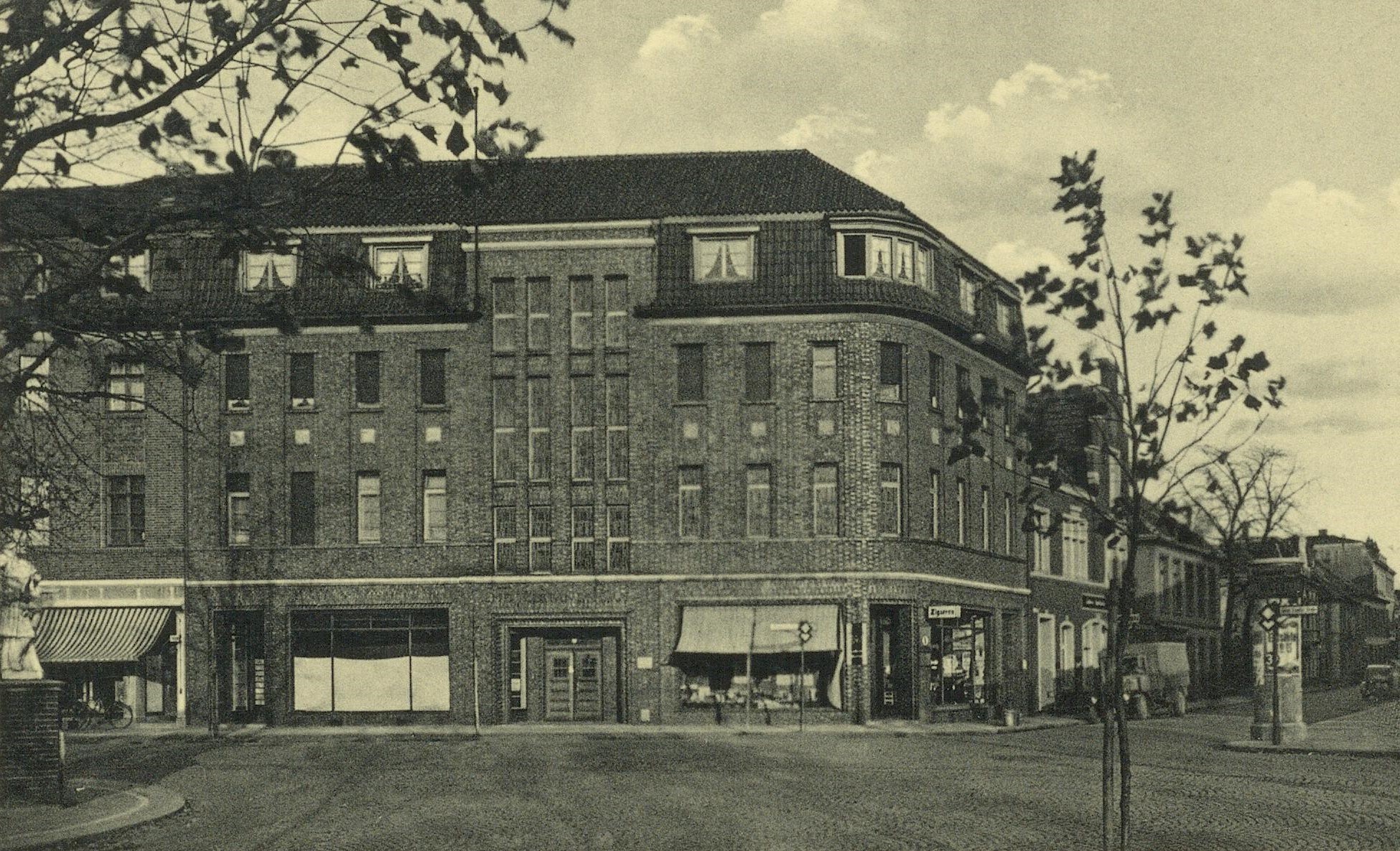
The photo, taken around 1930, shows the building on the corner of Ravardi-/Dinxperloer Straße, built in the architectural style of New Objectivity. The viewer's gaze is directed eastwards towards Ravardistrasse. The statue of the bridge saint Nepomuk can be recognised on the left-hand edge of the picture, facing the Westendbrücke bridge.
The Capitol Theatre opposite, which is not visible, was built in the same style in 1927. The Mittelstandshaus was built according to the plans of the Bocholt architect Ludwig Beier. All the professional groups united in the organisation, above all the building tradesmen, had pledged their cooperation.
Thanks to financial support from other members and foundations from previous years, the work was finally completed quickly and its imposing appearance became an ornament to the western part of the city.
Architecture on the pulse of time
Thanks to financial support from other members and foundations from previous years, the building was finally completed quickly and its imposing appearance became an ornament to the western part of the city
Three shops were housed on the ground floor. The offices, the meeting room for 50 people and the managing director's room were located on the first floor. These rooms and the staircase were fitted with lead-framed and hand-painted glass windows. The corner building also housed five modern flats.
In 1928, the organisation had 23 guilds and associations with a total of 994 members. Due to a precarious financial situation, the Mittelstandshaus went into receivership in 1935. On 22 March 1945, the building was completely destroyed in an air raid.