

© Stadt Bocholt
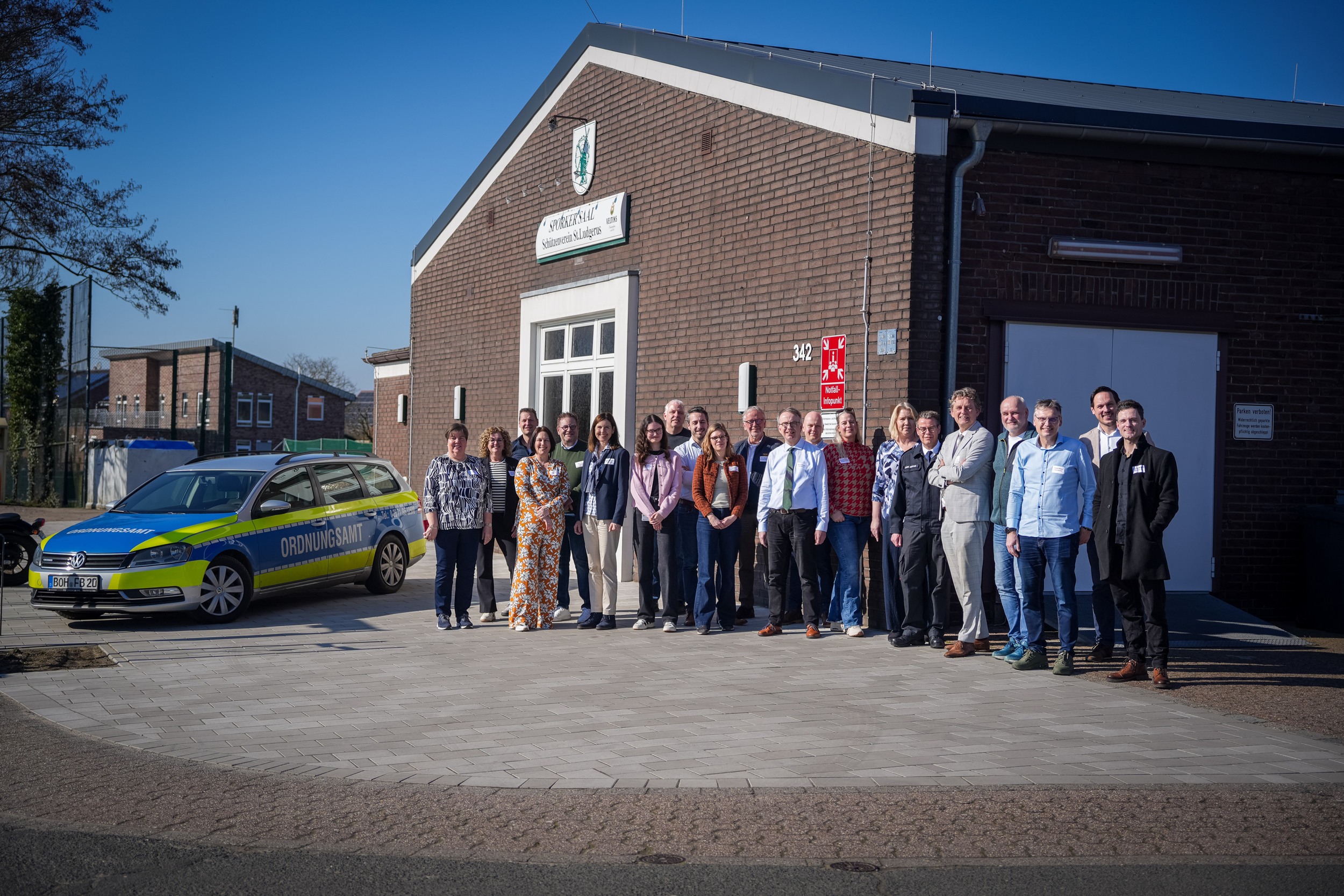
The German and Dutch colleagues exchanged ideas at a meeting in the Spork hall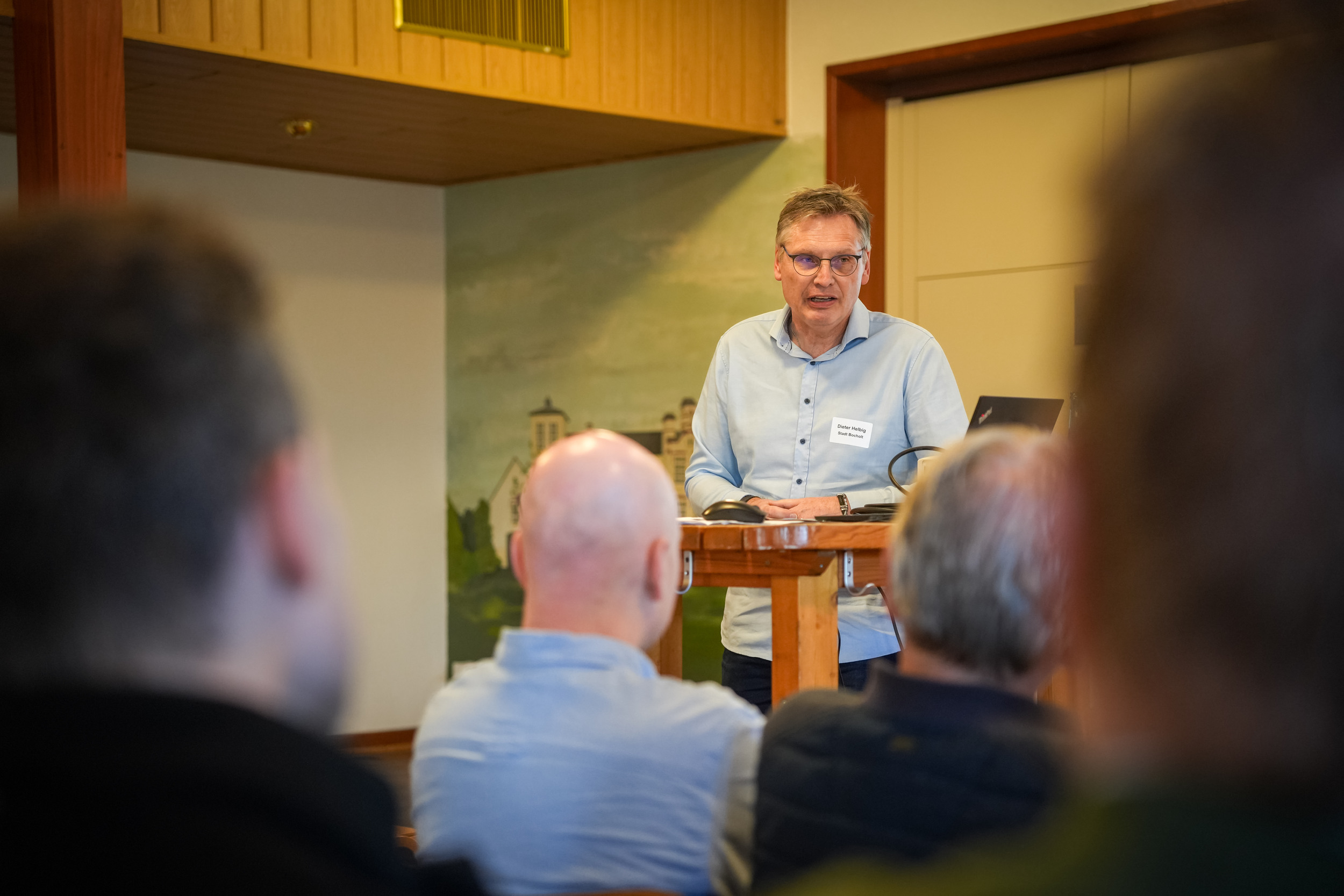
© Stadt Bocholt
Dieter Helbig from the Public Order Department of the City of Bocholt reported on the German NIP system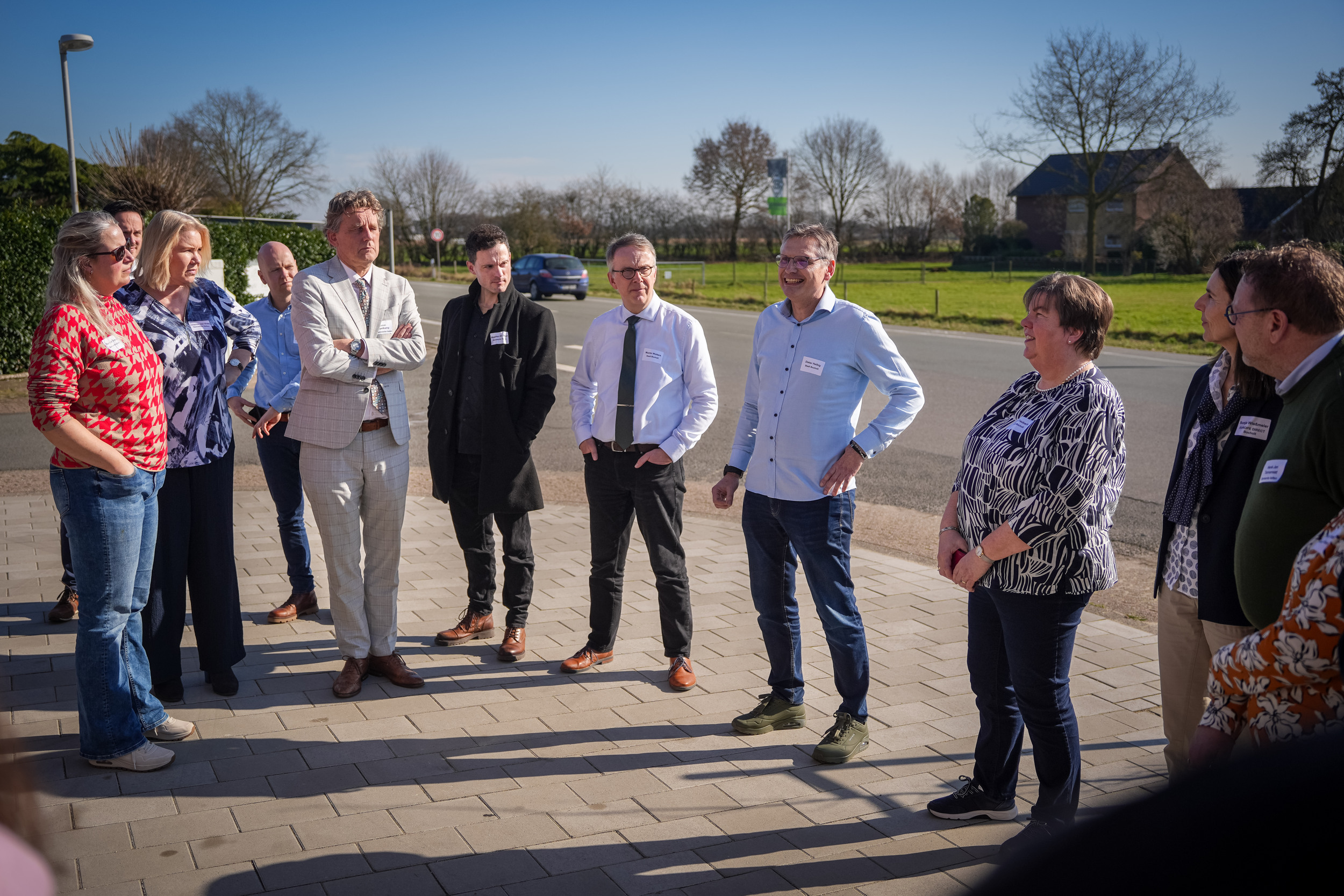
© Stadt Bocholt
The Sporker Saal is itself one of the eleven emergency information points in the city of BocholtDutch delegation learns about Bocholt's emergency information points
Knowledge transfer for civil protection // Plans to set up emergency bases in the Netherlands
A delegation from the Netherlands has now visited Bocholt to find out about the system of emergency information points. The guests from the North and East Gelderland security region are planning to set up similar structures and used the exchange to gain practical insights. Bocholt is one of the pioneers in this form of crisis preparedness in the Borken district.
This week, the city of Bocholt received a visit from the Netherlands. Anton Stapelkamp, mayor of the neighbouring municipality of Aalten, joined representatives from the North and East Gelderland security region and the municipalities of Ermelo, Nunspeet and Harderwijk to find out about the local organisation of civil protection in Bocholt. Petra Taubach, Bocholt's European Commissioner, welcomed the guests to the Spork hall.
The so-called emergency information points, NIP for short, which are already firmly established in Bocholt, were the centre of interest. The emergency information points, which are supplied with emergency power, serve as a point of contact for the population in crisis situations, for example in the event of a large-scale power failure, in order to obtain information, make emergency calls or obtain clean drinking water. While the topic has been intensively pursued in Germany since 2016, the Dutch municipalities are currently launching a pilot phase to set up such centres.
Dieter Helbig from the Public Order Department, who is responsible for civil protection at the city of Bocholt, among other things, explained the strategic direction and background of the system to the guests. He emphasised that the gas shortage a few years ago had massively accelerated the need to set up the information points in Bocholt.
Bocholt has a total of eleven such contact points in the city area. Compared to many neighbouring municipalities, which often only have a smaller number, Bocholt's system is particularly broad-based. A key aspect of the exchange was the staffing of the points in the event of an emergency. In Bocholt, the emergency contact points are operated by around 150 municipal employees working in alternating shifts. The Dutch side was particularly interested in the question of involving volunteers.
Another key topic of the expert discussion was technical equipment and communication. The city of Bocholt operates its own radio network, which ensures the connection between the locations in the event of a crisis. A particular challenge here is the exact alignment of the network at the national border, as the specifications of the Federal Network Agency prohibit broadcasting into Dutch territory.
Cooperation is to be intensified beyond the mere exchange of knowledge. Mayor Anton Stapelkamp suggested that the neighbouring districts of Suderwick and Dinxperlo in particular should be considered together in the event of a disaster so that they can support each other directly.
The Bocholt fire brigade also emphasised that cooperation at a professional level was already working excellently and that the administrative levels of the administrations now needed to be more closely interlinked. The Dutch delegation concluded with an invitation to a future exercise in Aalten in order to continue the cross-border dialogue. The planned pilot phase in the Netherlands will start in January 2026 and should benefit from the knowledge gained in Bocholt.
Further information on the emergency information points can be found at www.bocholt.de/krise
© Stadt Bocholt
The German and Dutch colleagues exchanged ideas at a meeting in the Spork hall© Stadt Bocholt
Dieter Helbig from the Public Order Department of the City of Bocholt reported on the German NIP system© Stadt Bocholt
The Sporker Saal is itself one of the eleven emergency information points in the city of Bocholt