

© Stadt Bocholt - sw
Diplomacy in the classroom: the Foreign Office visits the Mariengymnasium
Staff member from the Federal Foreign Office visits the Mariengymnasium // Partnership with EUROPE DIRECT Bocholt
How does the Federal Foreign Office actually work? What roles do its staff take on around the world? And what does a typical working day look like, amidst international crises, political talks and cultural exchange? Pupils on the European Studies course at Mariengymnasium received answers to these and other questions at a special event held as part of the nationwide series "Diplomacy in Schools".
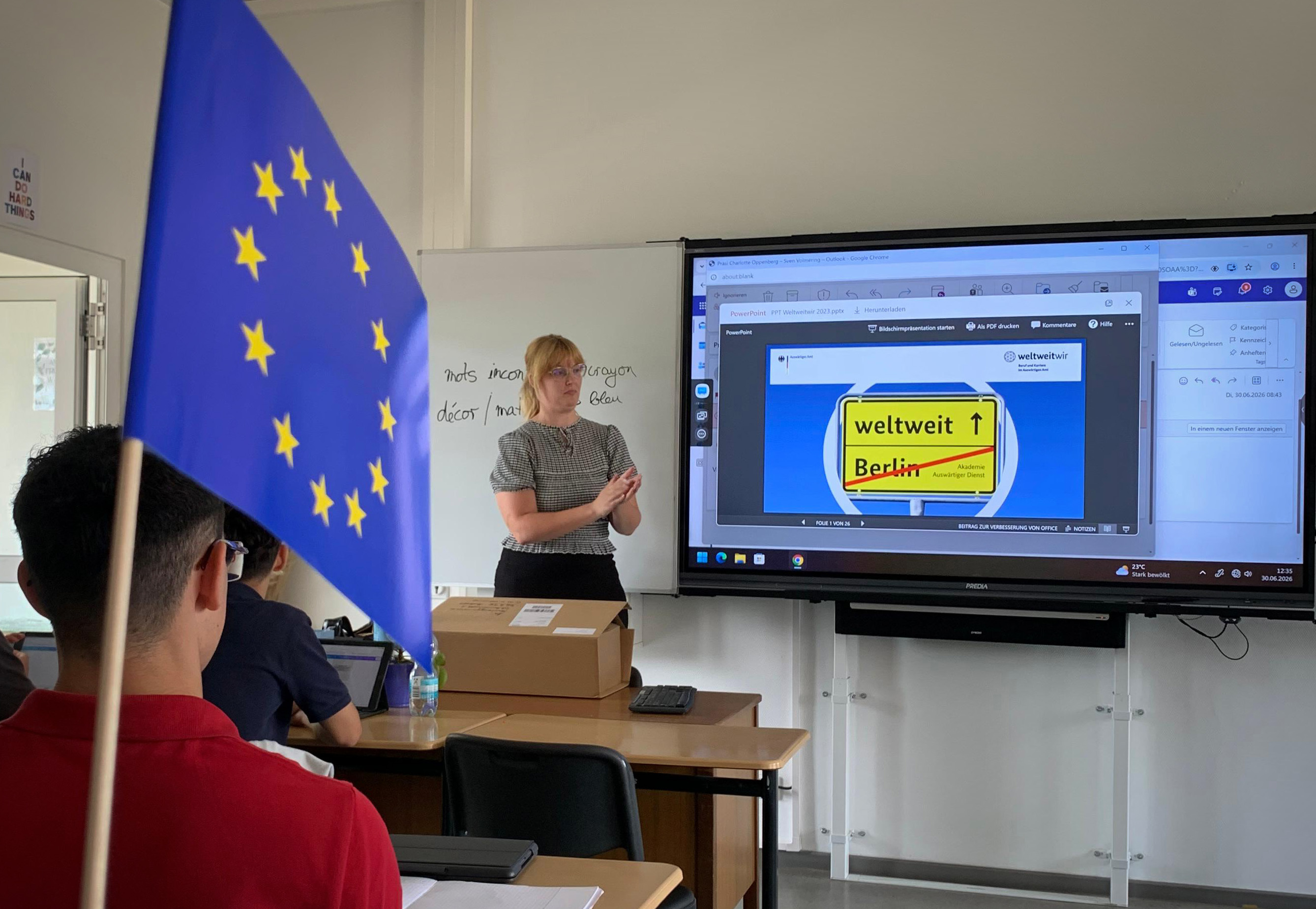
Charlotte Oppenberg, a member of staff at the Federal Foreign Office, gave a presentation on her work last Tuesday in the 'Europe' course at the Mariengymnasium. The "Diplomacy in Schools" series enables young people to meet staff from the Federal Foreign Office face-to-face and helps to strengthen political education and foster an interest in international affairs and European issues.
Together with its partner organisation, EUROPE DIRECT Bocholt, the Mariengymnasium succeeded in arranging a visit by Charlotte Oppenberg. The former pupil of the Mariengymnasium was staying with her family in Bocholt between two postings abroad and took the opportunity to share her experiences with the pupils. Having served in posts including Moscow, she is currently preparing for her next posting in Tokyo.
Areas of responsibility at the Federal Foreign Office
At the start of her talk, Ms Oppenberg outlined the diverse remit of the Federal Foreign Office. She explained how Germany represents its interests worldwide, fosters international relations, supports peace and security processes, and works to protect German nationals abroad. She also highlighted the importance of diplomatic cooperation in an increasingly interconnected world and made it clear that diplomacy encompasses far more than political negotiations: from cultural and educational work and economic cooperation to crisis prevention and humanitarian aid.
Another key focus of the talk was the wide range of career opportunities within the Federal Foreign Office. Ms Oppenberg provided information on the various career paths, the necessary qualifications and the selection process. She emphasised that, in addition to excellent foreign language skills, openness to other cultures, flexibility, the ability to work in a team and a willingness to spend frequent periods abroad are key requirements for a career in the diplomatic service.
Personal insights into everyday working life
The event was made particularly vivid by the speaker's personal insights into her own day-to-day working life. She spoke of her experiences during her postings in Vietnam and Russia, amongst other places, described the challenges of living and working abroad, and explained just how varied and demanding the role of a diplomat is. At the same time, she spoke openly about the demands that frequent relocations and an international lifestyle place on one's private life.
The event offered the pupils a rare opportunity to gain first-hand insight into diplomacy and to engage in conversation with a young representative of the Federal Foreign Office. At the same time, it underlined the importance of international cooperation and open dialogue on current political challenges. The numerous questions asked following the talk demonstrated the young people's keen interest in international relations and European and global politics.
About EUROPE DIRECT Bocholt
EUROPE DIRECT Bocholt is part of the Office of the Mayor and the Executive Board of the City of Bocholt and serves as the local point of contact for questions relating to the European Union. Its role is to provide local residents with information, advice, assistance and answers to questions about Europe. Furthermore, EUROPE DIRECT Bocholt aims to promote engagement with Europe and to provide information on current developments in European politics.
© Stadt Bocholt - sw