


© Stadtarchiv Bocholt
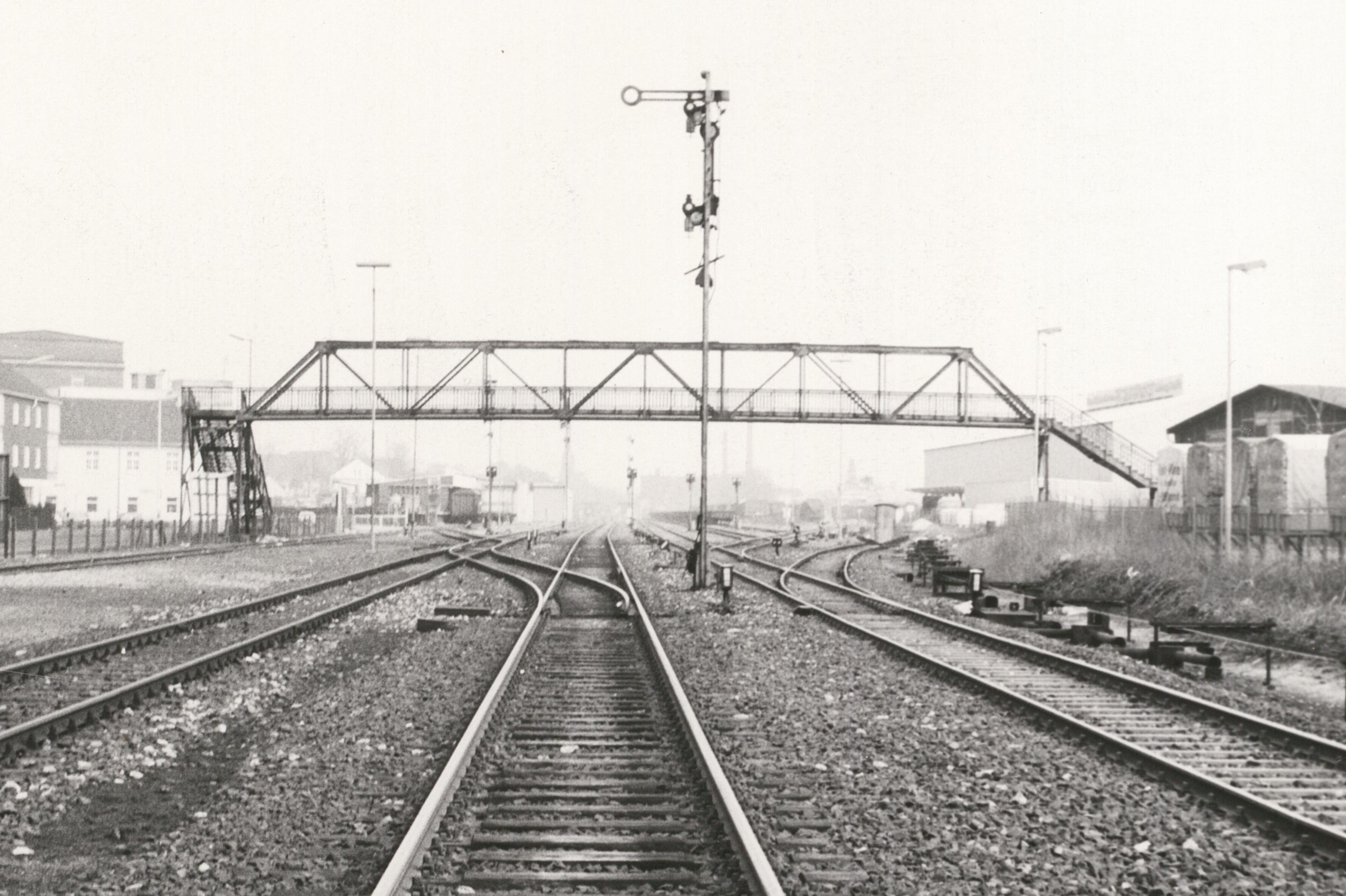
The railway bridge on Kaiser-Wilhelm-StraßePhoto of the Month for July: The railway bridge on Kaiser-Wilhelm-Straße
Abbreviation for factory workers and schoolchildren // Photo from 1979 shows a bridge from the 1930s
The 'Photo of the Month' for July 2026 from the Bocholt City Archives shows the historic railway bridge on Kaiser-Wilhelm-Straße.
In the summer of 1933, the Reichsbahn decided to build a new railway viaduct between Kaiser-Wilhelm-Straße and Mühlenweg. This was by no means the first bridge of this kind to be built here. A first footbridge had already been erected at this spot 27 years earlier.
Some background: after the town of Bocholt had been connected to the railway network in 1878, the Reichsbahn had the station facilities extended on several occasions. In 1902, one such measure necessitated the relocation of the level crossing to Dingdener Straße, in the form in which it still exists today. Previously, what was then known as Kaiserstraße split at the level of today's Alfred-Flender-Straße, branched off to the left in this area and joined Mühlenweg at the locomotive shed. Following the structural alterations, cyclists and pedestrians now had to take a longer route to reach Fildeken or the Ludwig Schwartz spinning mill on Rheinstraße located there. The railway bridge, built in September 1906, provided a solution here, offering the numerous factory workers a shortcut on their daily commute. It is even said that cyclists - rather than taking the 500-metre detour - would carry their bikes up the viaduct and back down the other side. Incidentally, the railway bridge also benefited the many schoolchildren who lived in the area around what was then Sachsenstraße and Mussumer Kirchweg, enabling them to reach the Fildeken School - which opened in 1910 - quickly and safely.
The railway footbridge was approximately 40 metres long in total. Its steps on Kaiser-Wilhelm-Straße, with an intermediate platform, ran at right angles to the actual crossing. Behind the locomotive shed, which was demolished in 1988, one descended via a flight of steps running parallel to the main walkway and then reached Mühlenweg. This first footbridge was already dilapidated by 1933 and was replaced by the aforementioned new structure, built a few metres further south, which was dismantled in the mid-1980s following a prolonged closure. The photograph shows the engineering structure from the south in November 1979. Many pedestrians will still remember the melodious sound on the bridge. It was caused by the wooden planks, which were laid end-to-end on the iron structure of the footbridge and produced an echo when walked upon at a brisk pace.
Photo: Bocholt City Archives, Image Collection No. 6159, Text: Wolfgang Tembrink
© Stadtarchiv Bocholt
The railway bridge on Kaiser-Wilhelm-Straße