
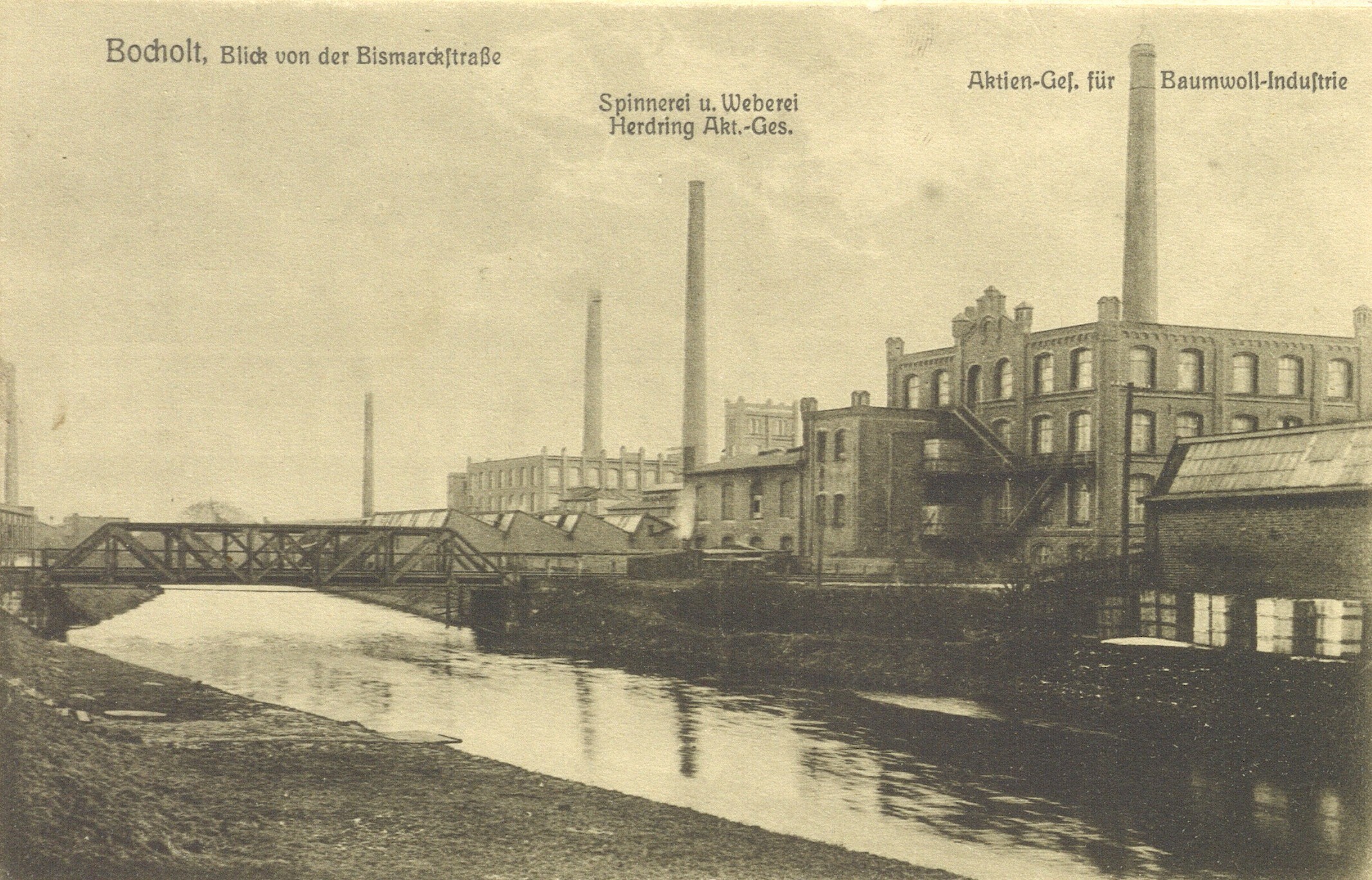
© Stadtarchiv Bocholt Bildsammlung Nr. 6276
Textile industry in Bocholt on a historical postcard from 1925 with the bridge for the train to Borken. On the banks of the Bocholter Aa are the Aktiengesellschaft für Baumwollindustrie (now LernWerk) and in the background the Herding spinning and weaving mill (now LWL-TextilWerk)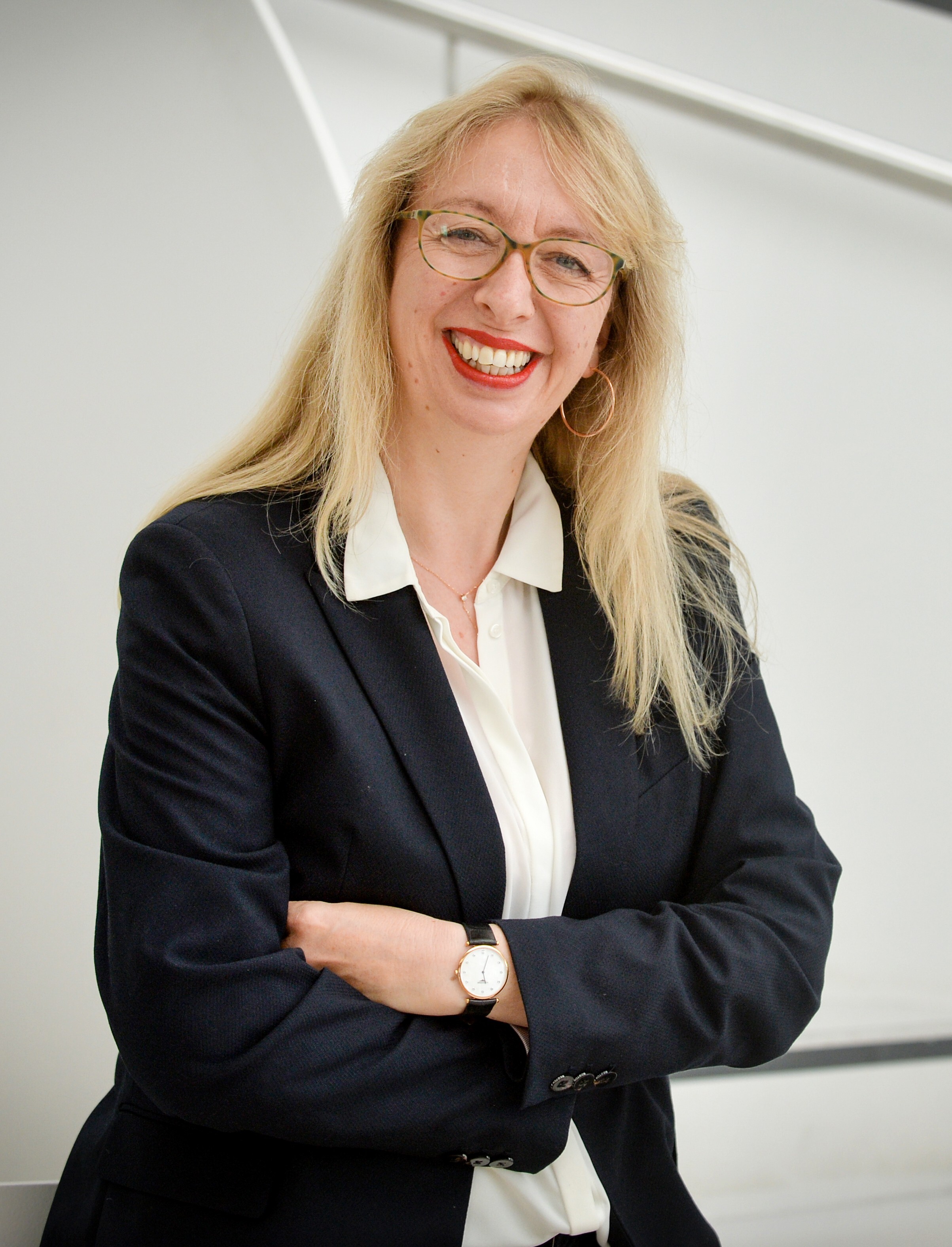
© Prof. Dr. Stefanie van de Kerkhoff
Speaker Prof Dr Stefanie van de KerkhoffDiscussion group on Bocholt's city history: Insights into the Westphalian textile region
Fierce competition or peaceful co-operation? The division of labour between Bocholt, Borken, Nordhorn & Co. in the Westphalian textile region until the Second World War
On Wednesday, 25 March 2026 at 6.30 pm, the city of Bocholt invites you to the Bocholt city history discussion group in the media centre (Alter Bahnhof) in Bocholt. The guest is economic and business historian Prof. Dr Stefanie van de Kerkhoff (University of Mannheim), who will discuss the division of labour in the Westphalian textile region up to the Second World War between Bocholt, Borken and Nordhorn under the question "Hard competition or peaceful cooperation?".
She will present the exciting textile history of the region during the German Empire and the Weimar Republic in a generally understandable way. Following the lecture, the Bocholt-Rhede-Isselburg Adult Education Centre and the town archives invite you to a discussion with the speaker. Renate Volks-Kuhlmann, city archivist, will moderate the discussion. Admission is free.
Although Westphalia is still characterised today by the diversity and size of its agricultural businesses, it also has a rich industrial history. Although railways and factories came later than in the industrial cities of the Rhine-Ruhr region, the textile industry also flourished in Bocholt, Borken, Nordhorn and other towns in the Westphalian textile region during the period of high industrialisation.
The LWL textile factory in Bocholt still bears witness to this time with looms and machines from Bocholt and Borken. But what role did the different towns and companies such as van Delden, Herding, Lühl, Bierbaum & Lünenborg, Gebr. Büning, Wilh. Wülfing u. Co. or Nino and Povel play? Was there only fierce competition or did a division of labour develop in the region that also resulted in peaceful cooperation or at least coexistence? What role did infrastructures such as the connection to the supra-regional railway network, gas, water and electricity supply play?
The Bocholt city history discussion group is a co-operation between the Bocholt-Rhede-Isselburg adult education centre and the city archives. Historians present their research topics and then take part in a discussion with the audience. The event is organised in cooperation with the Society for Historical Regional Studies of the Western Münsterland.
Registration is possible at vhs.bocholt.de or by e-mail to stadtarchiv(at)bocholt(dot)de.
© Stadtarchiv Bocholt Bildsammlung Nr. 6276
Textile industry in Bocholt on a historical postcard from 1925 with the bridge for the train to Borken. On the banks of the Bocholter Aa are the Aktiengesellschaft für Baumwollindustrie (now LernWerk) and in the background the Herding spinning and weaving mill (now LWL-TextilWerk)© Prof. Dr. Stefanie van de Kerkhoff
Speaker Prof Dr Stefanie van de Kerkhoff