


©
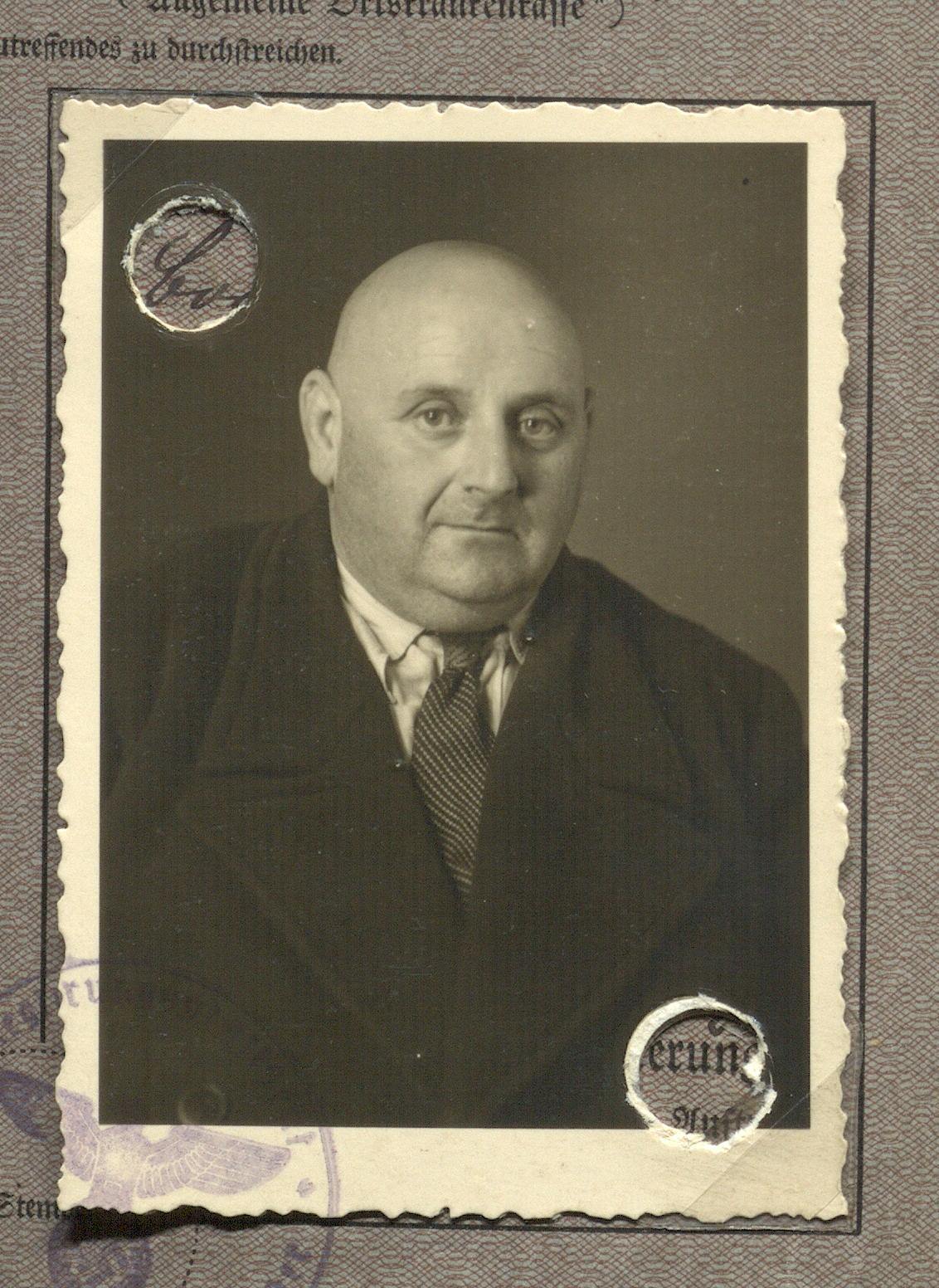
Photograph of Sally Cohen from his itinerant trader's licence, Bocholt City Archives, SBOH2, No. 1009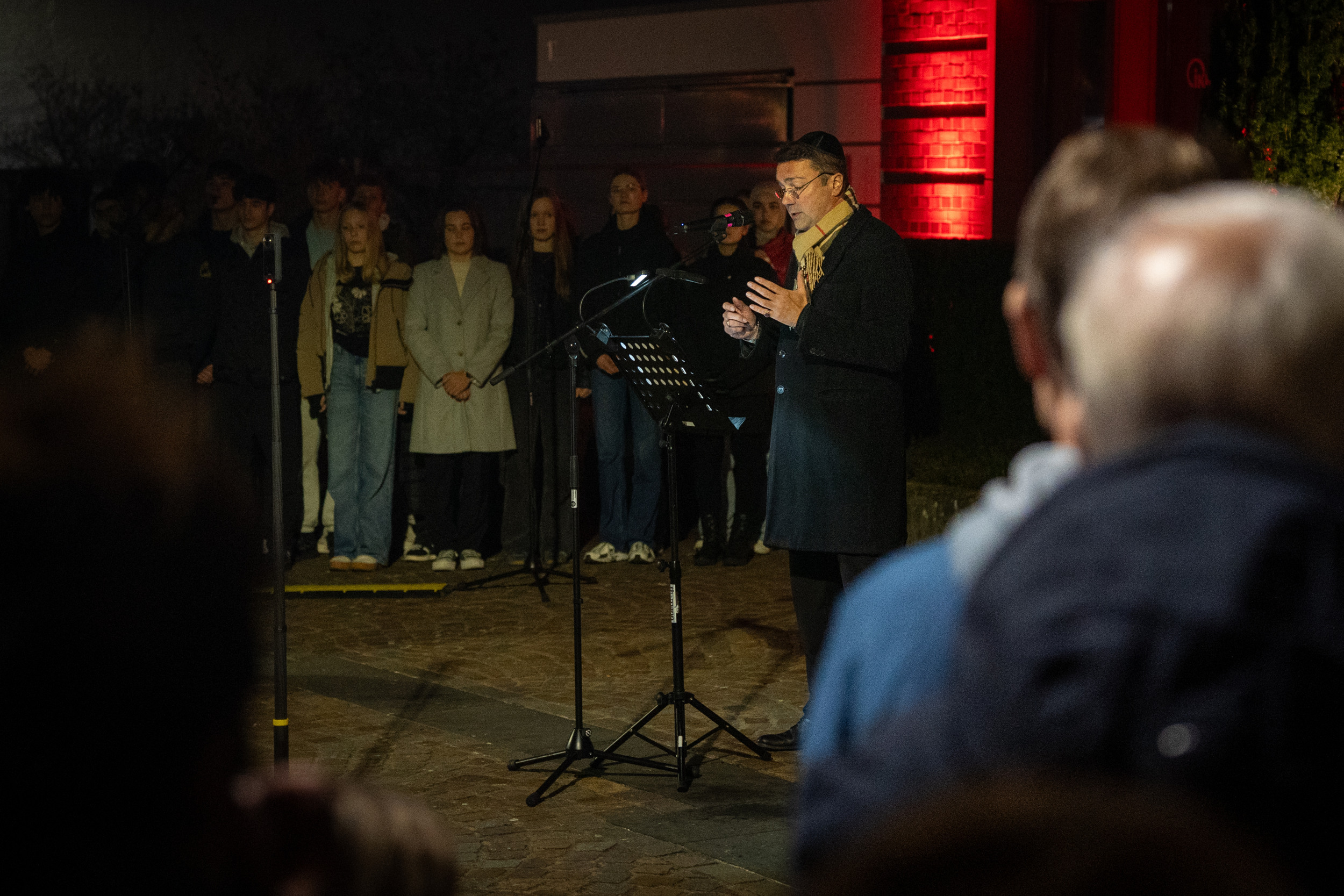
© Stadt Bocholt
The commemoration will take place at the memorial site marking the desecrated synagogue, where the Haus des Handwerks now stands.The town of Bocholt invites you to a commemoration of Kristallnacht
Commemoration on 9 November at 7.30 pm at the Haus des Handwerks // In memory of the Cohen family from Bocholt // Screening of the film "Never Alone" on 10 November at the Kinodrom
The town of Bocholt invites you to a commemoration of Kristallnacht and the victims of Nazi tyranny on Monday, 9 November 2026, at 7.30 pm. The event will take place at the memorial site marking the desecrated synagogue, now the Haus des Handwerks. On this occasion, the town will commemorate the fate of Bocholt resident Sally Cohen and his family.
With the commemoration on 9 November, the town of Bocholt honours the memory of the victims of Kristallnacht 88 years ago. When, on the night of 9-10 November 1938, the Nazis attacked Jewish people throughout Germany, ransacking their homes and destroying their shops, the violence also affected the family of Sally Cohen from Bocholt. His life story is emblematic of the fate of many Jewish families from Bocholt. Thanks to the publication "Book of Remembrance - Jews in Bocholt 1937 to 1945" by local historian Josef Niebur, who died in 2026, key details of his life are known.
Sally Cohen was born on 19 April 1892 in Bocholt, the son of Dina and Isaac Cohen.
Following the early death of his first wife, Frieda Hein, he married Juliane Franzmann in Dinslaken on 23 September 1920. The marriage produced two daughters: Margot, born in 1921, and Ruth, born in 1923. The family moved several times within Bocholt. For a time, Sally and Juliane Cohen lived with their children in Sally Cohen's parents' house at 52 Langenbergstraße, where his brother Magnus ran a second-hand goods shop. Sally Cohen was apparently involved in trade himself.
People from the town also recalled him later on. Maria Niebur described how, whilst driving along Langenbergstraße, she had often seen Sally Cohen standing in front of his shop. He would stand there with his hands clasped over his stomach. Karl Walber recalled the second-hand goods shop and the stock that was stored in a space next to the house, visible from the street.
The Night of the Pogrom
On the night of 9-10 November 1938, the anti-Semitic violence perpetrated by the National Socialists escalated. The Cohen family's flat at 116 Dingdener Straße was also raided and ransacked. Sally Cohen was assaulted and driven through the streets.
Maria Niebur, a resident of Bocholt, recalled the following: "The next morning, a colleague of mine told me how the Nazis had driven Sally Cohen down the street in his pyjamas. During this, he was taunted, beaten and repeatedly knocked to the ground."
For the Jewish population in Bocholt and throughout the German Reich, Kristallnacht marked a further escalation of the deprivation of rights and threats that had been mounting for years. For the Cohen family, life in Bocholt was becoming increasingly dangerous.
Flight to the Netherlands - and the hope of safety
On 2 January 1939, their daughter Margot fled to the Dutch town of Goor. Hedwig Polak, one of Sally Cohen's sisters, also lived there. On 21 February 1939, Sally and Juliane Cohen left Bocholt and fled to Amsterdam. On their residence registration card, their departure was noted with the words "'without deregistration to Amsterdam (Holl.)'".
Their flight meant separation from their homeland, from loved ones and from the life they had known until then. It was also an attempt to escape Nazi persecution. However, the occupation of the Netherlands by German troops and the spread of persecution of Jews in the neighbouring country increasingly robbed the refugees of any sense of security there too.
A recollection by Günter Lorch, whose family were friends with the Cohens, gives an impression of how Jewish families remained connected across national borders during this period: "Later, [my] father worked as a gardener at a monastery near Venlo. Mum and I went to visit him there. Then I remember how Dad came back to Aalten and we drove to Amsterdam in thick fog. [...] There we met Sally Cohen. My father and Sally had both been supporters of the Olympia Bocholt football club."
Deportation and murder in Auschwitz
On 5 February 1943, Sally and Juliane Cohen were taken from Amsterdam to the Westerbork police transit camp for Jews. From there, they were deported first to the Bergen-Belsen concentration camp on 14 September 1943, and then to the Theresienstadt ghetto on 25 January 1944.
In September 1944, the Cohens were taken to Auschwitz on a so-called "'elderly transport'". The transport left Theresienstadt on 28 September 1944. Together with 2,944 other Jewish people, the couple were deported to the extermination camp.
Sally Cohen was murdered on 30 September 1944, the day of his arrival.
His wife Juliane also did not survive her imprisonment. According to the available sources, she died on 28 February 1945, shortly after the liberation of Auschwitz by the Red Army, as a result of the hardships endured during her imprisonment.
The persecution also affected the next generation. Their daughter Margot, who had fled to the Netherlands in 1939, was murdered in Auschwitz on 6 October 1944. Her daughter, Sally's granddaughter, Sophia Juliana Senta Lindeman, was also murdered there.
Of Sally Cohen's immediate family, only his daughter Ruth survived the Nazi persecution and her imprisonment in the Bergen-Belsen concentration camp. After the war, she returned to Bocholt from the Netherlands on several occasions. In 1948, Ruth Cohen married Alter Skurnick in Amsterdam. In 1950, the couple emigrated to Australia as "stateless persons". Ruth Skurnick died on 5 October 1994 in Melbourne.
The town of Bocholt invites all residents to take part in the commemoration of Kristallnacht and the victims of Nazi tyranny on 9 November 2026 at 7.30 pm. The commemoration will take place at the memorial site marking the desecrated synagogue, now the Haus des Handwerks.
On Tuesday 10 November, the town of Bocholt is also hosting an event at the Kinodrom. At 8.00 pm, the film "Never Alone" will be screened. This drama tells the story, based on true events, of the Jewish businessman Abraham Stiller, who offered shelter to Jewish refugees in Finland during the Second World War. Admission is free.
©
Photograph of Sally Cohen from his itinerant trader's licence, Bocholt City Archives, SBOH2, No. 1009© Stadt Bocholt
The commemoration will take place at the memorial site marking the desecrated synagogue, where the Haus des Handwerks now stands.