
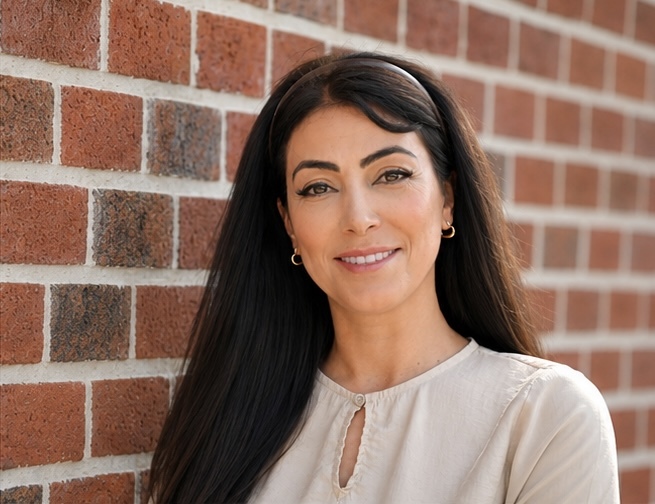
Selda Koldamca
A clear message: Let's preserve our language and culture!

© Foto: Nikolaus Kellermann
Selda Koldamca has been a member of the Committee for Equal Opportunities and Integration (ACI) - formerly the Integration Council - since the 2025 local and integration council elections. In this series, 'Inside ACI', Bruno Wansing introduces the members, recounting their family histories, aspirations and experiences in the field of integration.
Who is Selda Koldamca?
Born and raised in Bocholt, Selda now lives in Bocholt-Biemenhorst. She leads the children's choir, plays an active role in the International Mesopotamian Cultural Association's community and integration work, has been volunteering in refugee support for many years, and brings a wealth of professional expertise to her role as a biomedical technologist. Selda speaks five languages and considers both Kurdish and German to be her mother tongues. Her multilingualism shapes her understanding of identity, cultural diversity and successful integration. Selda comes from a Kurdish family in which language and culture play a central role. She has seven other siblings who, together with her family, have shaped her in an environment where solidarity, mutual support and cultural values were lived out as a matter of course. Her siblings, too, continue to make an important contribution to the association's work and play an active role in promoting integration, cultural exchange and social participation. Drawing on this family and cultural background, she has developed a deep understanding of the importance of language and culture in integration.
Selda has been working for around ten years as a biomedical technologist in the fields of pathology, cytology and dermatology. Her return to Bocholt from Hanover, where she trained, marked a period of adjustment to a new, multifaceted environment.
Her father, Mehmet, played a special role
Even as a child, Selda experienced a multicultural neighbourhood that had a lasting influence on her understanding of community. Living alongside people from different backgrounds, as well as forming many German friendships, had a significant impact on her youth. The close-knit nature of the neighbourhood fostered respectful interaction and intercultural exchange from an early age. She is Kurdish and follows the Yazidi faith, and feels a strong cultural connection to the Kurdish language and its traditions. The International Mesopotamian Cultural Association of Bocholt and the Surrounding Area e. V., founded by her father, Mehmet Koldamca, plays a special role for her; she is actively involved in the association and provides important impetus for cultural, community and integration work. These experiences contribute significantly to her credo of integration in practice.
Giving a voice to people with an international family history
She joined the ACI through her own association and the current chair of the ACI, Juan Lopez Casanava. "I have always sought first-hand information to help others with integration and to pass on knowledge. It is particularly close to my heart to give a voice to people with a migrant background and to highlight their concerns: equal opportunities, social participation and the fight against discrimination and exclusion. I firmly believe that language and culture must be consciously practised and passed on." Local associations play a key role in this.
"As well as Juan , my work has also been influenced by Bruno Wansing, the Integration Officer for the City of Bocholt and Managing Director of the ACI, whom I first met through my voluntary work and who simply won me over with his commitment and dedication."
Language, cultural preservation and participation
For her, language, cultural preservation and participation through community organisations are at the forefront of her work on the Committee for Equal Opportunities and Integration. She emphasises that integration must work without assimilation: the language and culture of people with an international family background should be preserved whilst also being shared with the wider community. At the same time, she considers it important to actively promote the social, political and cultural participation of people with a migrant background and to strengthen equal opportunities.
The ACI's visibility in the public eye is also a key concern for her: greater engagement with community organisations and the wider public, a stronger presence in the town, and the involvement of community organisations in committee meetings. Politically, she views the rise in right-wing extremism with concern; people with an international family background should feel welcome in Bocholt. For her, the elimination of discrimination, prejudice and exclusion is an essential part of successful integration work.
Listening and getting to know one another are essential
She considers cooperation within the ACI to be generally good and emphasises the importance of a diversity of opinions. Listening and getting to know people are essential in this regard. Nevertheless, she would like to see greater participation from various stakeholder groups and greater involvement in committee meetings of associations and organisations that actively work with refugees, for example.
She views cooperation with politicians and the administration as positive, with occasional differences of opinion - which she sees as an opportunity for constructive dialogue.
Mutual understanding and opportunities for cultural participation
According to Selda, the key prerequisites for successful integration are linguistic participation, the preservation of one's own culture and access to information. For her, integration does not mean assimilation, but rather mutual understanding and opportunities for cultural participation.
She considers good access to education, training, work, housing and healthcare to be particularly important in order to enable genuine equality of opportunity. In her view, language support plays a key role, as a good command of German significantly facilitates educational success, career prospects and social contacts. At the same time, multilingualism should be recognised as a strength and its potential promoted accordingly.
Committed community organisations and forms of public recognition play a significant role.
Visibility, dissemination of information, involvement of associations
She advocates for greater visibility for the ACI, regular public appearances and the dissemination of information. It is also important, she says, to involve associations more closely in committee meetings - for example, through joint events such as May Day, Mother Language Day or summer festivals. Expanding the "engaged city" network and ensuring broader participation by associations in municipal events are at the top of her list. Political education and mother-tongue instruction (HSU) in languages where there is a need are further cornerstones of her educational policy demands.
Children, young people and families in particular should receive greater support to improve educational opportunities and social integration at an early stage. Selda Koldamca also attaches great importance to closer dialogue between citizens, the administration and politicians, so that the concerns of local communities are better heard and taken into account.
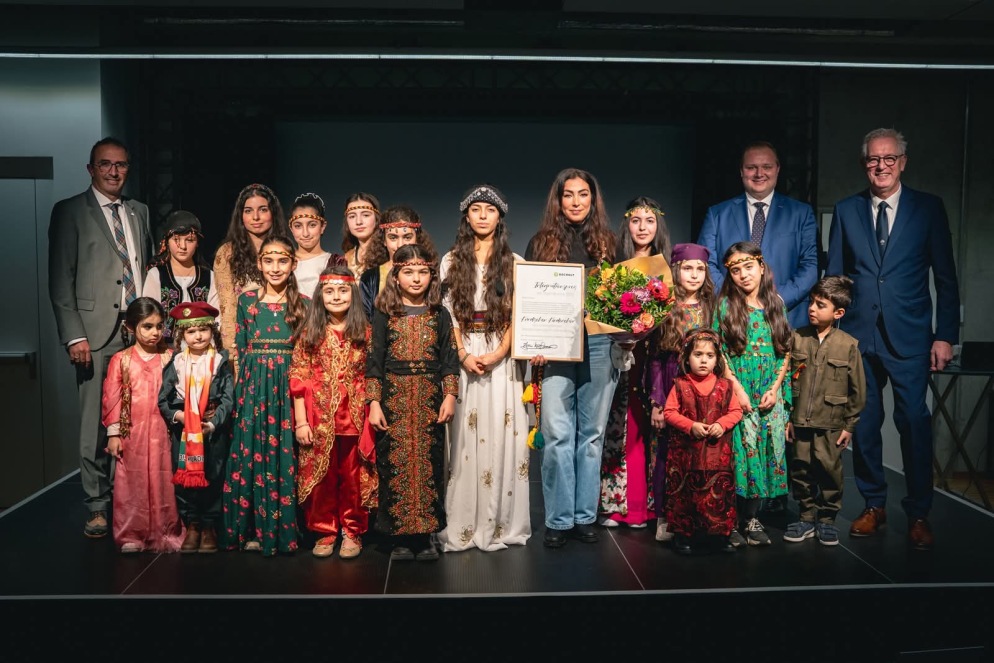
Integration Award Winner
Both in her private and professional life, Selda is closely connected to culture and language: she plays the tembur and leads the children's choir. Her regular performances include the Family Festival on 1 May and appearances at cultural events organised by Kurdish associations. In recognition of her work promoting integration and culture, the children's choir she leads at her own association was awarded the City of Bocholt's Integration Prize in November 2025. In addition, she has been volunteering in refugee support for many years and is actively committed to providing support, guidance and social inclusion for refugees. She strives for visible cultural integration that brings people together and strengthens the diversity of cultural offerings.
Mother-tongue instruction, public relations, presence in the city centre
For this term of office, Selda plans to further expand language provision - implementing mother-tongue language teaching (HSU) where needed and creating multilingual programmes. Public relations work is to be further strengthened - by increasing the organisation's presence in the city centre, involving more associations in committee meetings and consolidating networks.
Selda repeatedly emphasises that greater direct participation by people with an international family background is necessary. The involvement of associations in committee work, more political education and open dialogue with the administration and civil society are at the top of the agenda.
A clear message: preserving language and culture
Selda Koldamca delivers a clear message: preserving language and culture, whilst building bridges - so that people from diverse migration backgrounds feel respected, welcome and actively involved in Bocholt. Her experiences in a multicultural neighbourhood, her many friendships, her involvement in the association, her voluntary work and her professional expertise shape her pragmatic, inclusive approach at the ACI.