


© Stadt Bocholt
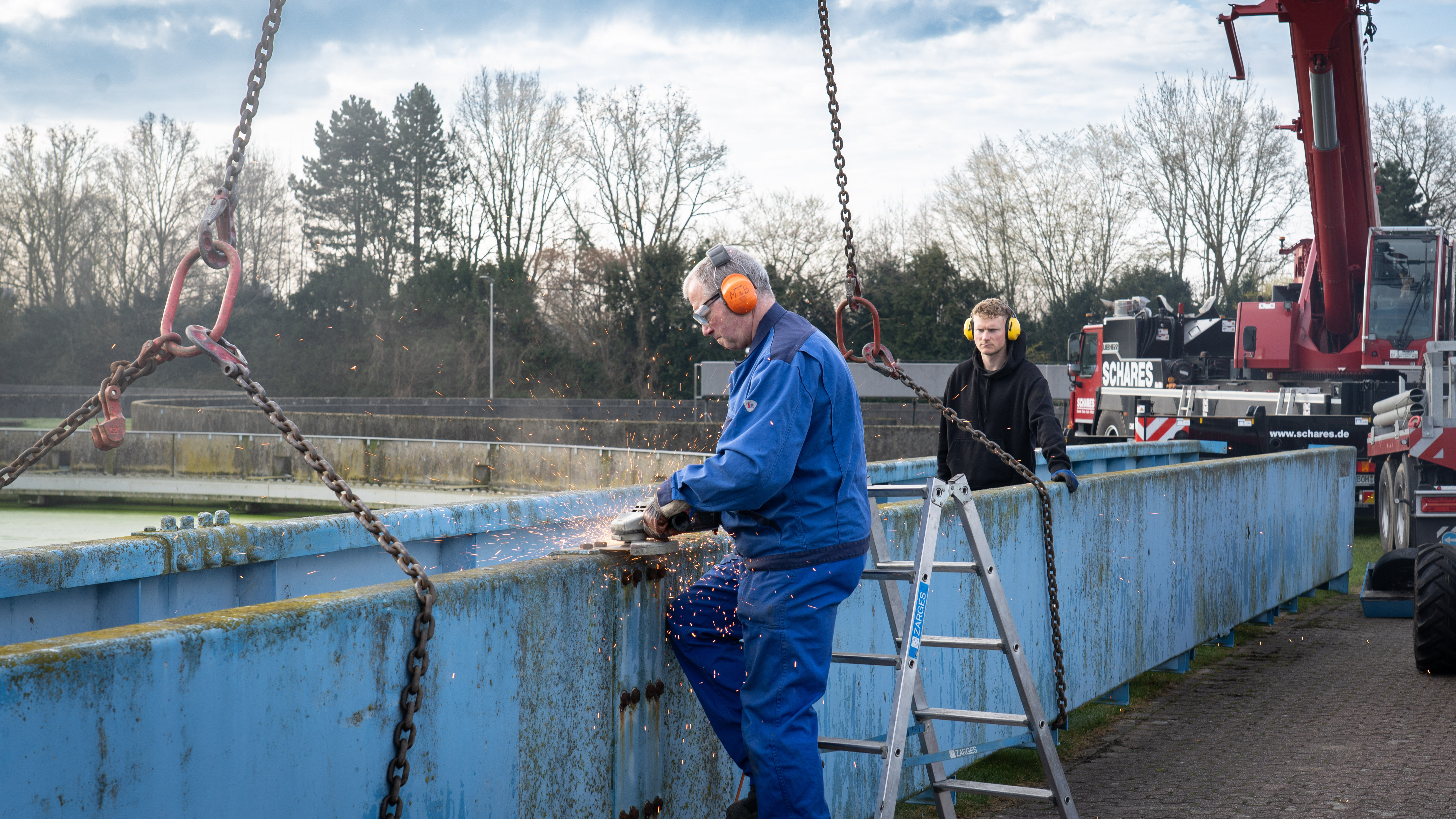
In March, the 28-metre-long bridge was cut into two sections for removal.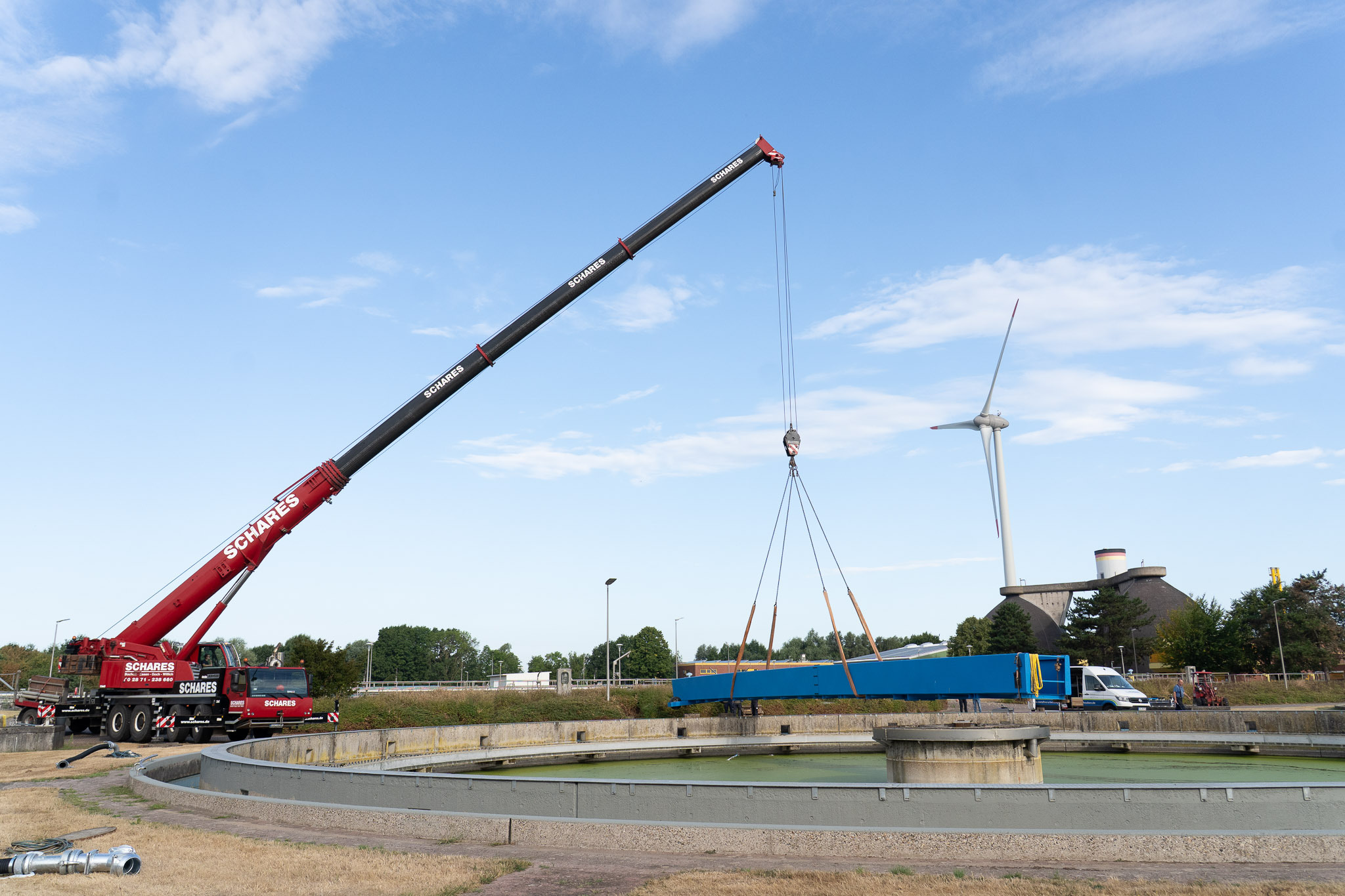
© Stadt Bocholt
Following its refurbishment, the 28-metre-long scraper bridge was put back into service at the Bocholt sewage treatment works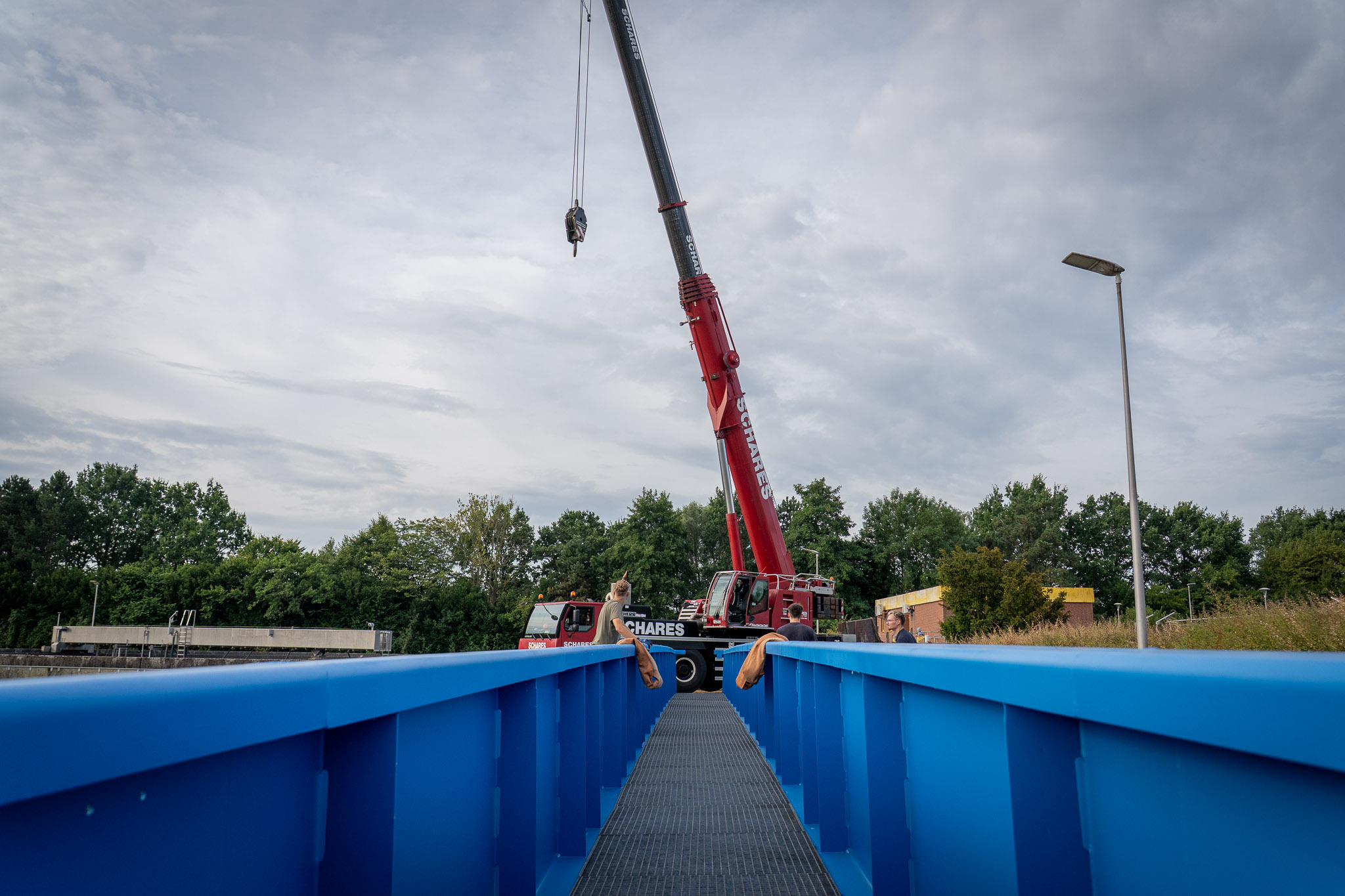
© Stadt Bocholt
Following its refurbishment, the 28-metre-long scraper bridge was put back into service at the Bocholt sewage treatment worksRefurbished Räumer Bridge back in service at the Bocholt sewage treatment works
Comprehensive refurbishment of 28-metre bridge // Reinstallation carried out using a large crane
The refurbishment of the Räumer Bridge at the Bocholt sewage treatment works has been successfully completed. On 4 August, a large crane reinstalled the approximately 28-metre-long steel structure into Secondary Clarifier 3 at Brömmelingstiege.
Back in March, the existing scraper bridge was removed from the secondary clarifier, which has a capacity of around 2,850 cubic metres. The structure was then fully refurbished at a specialist workshop. As part of this process, it was sandblasted, hot-dip galvanised and repainted. With the aid of a large crane, the bridge has now been reinstalled in its original position.
The scraper bridge plays a key role in wastewater treatment. During operation, it rotates over the secondary clarifier and uses a scraper blade to push the settled activated sludge into the funnel-shaped centre of the tank. From there, the sludge is pumped out and returned to the treatment cycle of the aeration tanks. The treated water then flows over the edge of the tank into the outlet.
Refurbishment rather than replacement
The original plan was to replace the scraper bridge entirely. "However, discussions with other sewage treatment works have shown that refurbishing our existing scraper bridge is the best solution, both technically and economically", says Christian Schaffeldt, manager of the Bocholt sewage treatment works at the Waste Management and Services Department. The decision was therefore deliberately made to refurbish the existing scraper bridge.
The scraper bridges, which were manufactured in the 1980s, are considered particularly robust and durable due to their solid construction. Modern systems often no longer achieve the same level of stability. Refurbishment also makes economic sense: the refurbishment will cost around 75,000 to 80,000 euros, whereas a new scraper bridge would likely have cost between 200,000 and 250,000 euros, depending on the design.
© Stadt Bocholt
In March, the 28-metre-long bridge was cut into two sections for removal.© Stadt Bocholt
Following its refurbishment, the 28-metre-long scraper bridge was put back into service at the Bocholt sewage treatment works© Stadt Bocholt
Following its refurbishment, the 28-metre-long scraper bridge was put back into service at the Bocholt sewage treatment works