


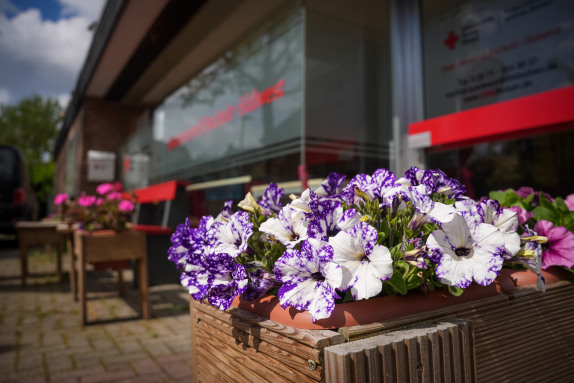
Sewing Café at the DRK Bocholt-Südwest Centre
A very special café
There's a café on Bärendorfstraße in Bocholt. When you step inside, you can hear a coffee machine chugging away here and a sewing machine whirring there. In between and all around, you can see several women chatting amiably in small groups - probably talking shop and exchanging advice, or simply having a natter about this and that. At the same time, they're busily at work - with needle and thread, fabric and scissors, ironing boards and irons. We're in the sewing café.
© Joachim Freund
A place to meet
The Sewing Café is part of the German Red Cross's (DRK) community work in the Bocholt South-West neighbourhood. It is open every Friday from 9.30 am to 11.30 am. The café's visitors are rarely men; they are predominantly women from the local area. Sometimes there are five of them, sometimes as many as ten. They often come for practical reasons, as they can get advice here on how to alter and adjust items of clothing. But the Sewing Café offers more than that. It fosters connections, new encounters and, once people have got to know one another, joyful reunions. It gives a sense of belonging.
In this café, you aren't served. Visitors are encouraged to take the initiative themselves: to come up with ideas, find solutions and be creative. Dexterity and concentration are required when they make useful items for the home - tablecloths, for example, or liners for bread and egg baskets - as well as yoga cushions or a suitable mat for the dog. They're constantly learning new things and setting themselves goals, such as when they make fruit and vegetable bags for the Bocholt Health Days. They achieve successes - visible, tangible and met with a warm response.
© Joachim Freund
Volunteer seamstress
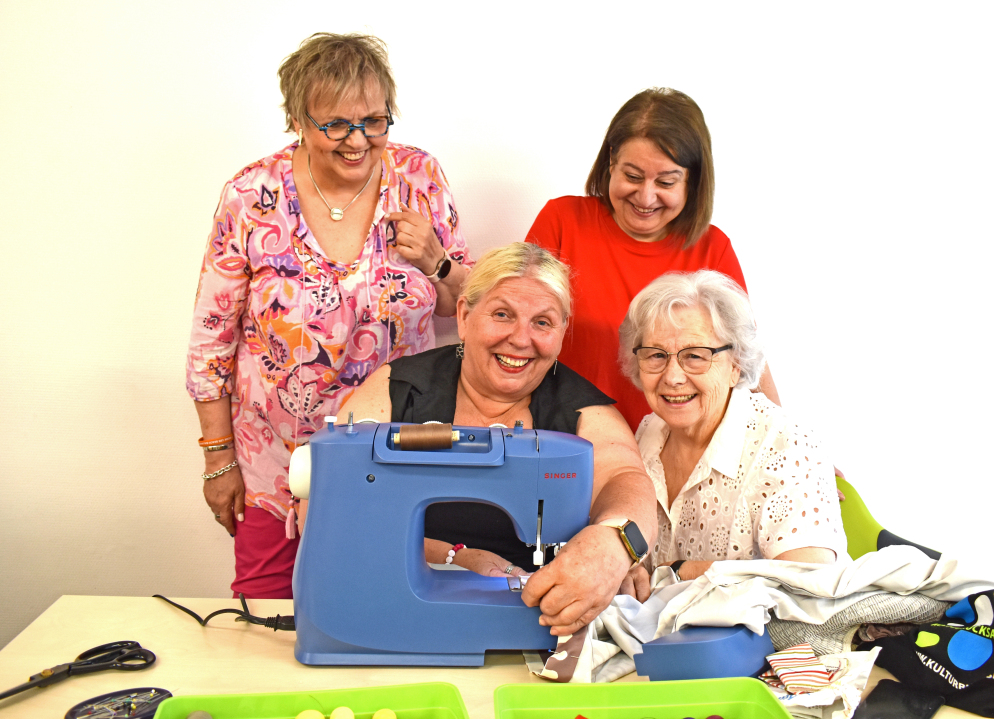
The fact that Glades Tchiri (back right), manager of the neighbourhood centre, is also a seamstress is, of course, ideal for the café's services. ""But it wouldn't work without voluntary support,"" she says, referring on the one hand to her mother Dalila Samuel, who helps out, but in particular to Irmgard Rensinghoff (back left). You could describe her as a skilful threader - in the best sense of the word. She says she used to knit even as a child - she did needlework. Needlework was a collective term for textile crafts - crocheting, knitting, sewing - and a school subject. She taught herself almost all the skills she now uses at the sewing café. When her role in the Social Services Department of the City of Bocholt came to an end, she took the inspiration from that experience to get involved in voluntary neighbourhood work. That's how the Sewing Café came about for her two and a half years ago.
Initiating new ventures and projects is right up her street. "She often comes up with ideas", says Glades Tchiri. She sources sewing patterns, templates and specialist literature, and sometimes even the necessary materials. Through the 'Kulturrucksack' programme, young girls found their way to the Sewing Café to make hair ties. Doll's dresses are a new venture.
© Joachim Freund
It's all about being together
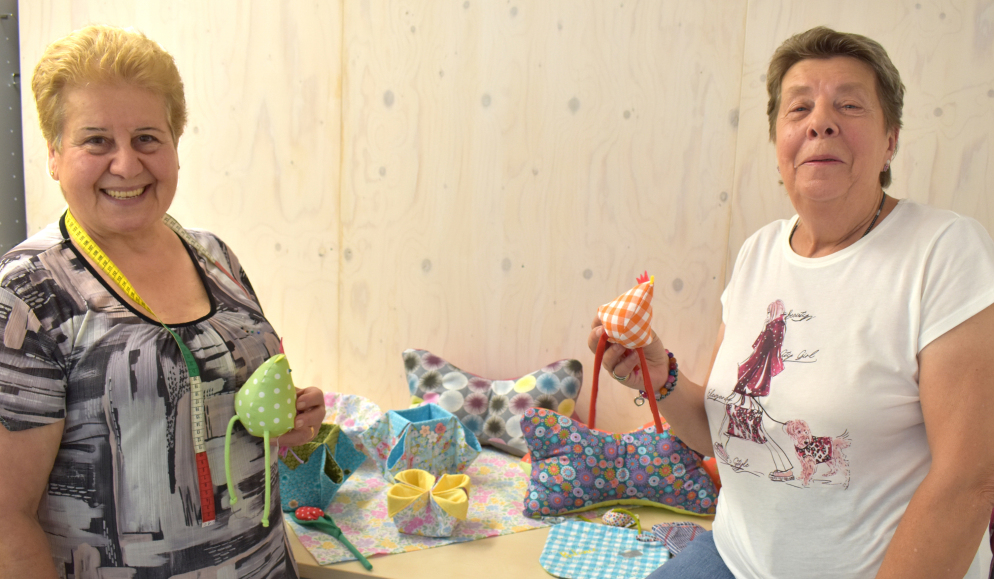
Anyone who comes to the sewing café receives inspiration and support from Glades Tchiri and Irmgard Rensinghoff, though the participants also help one another. Luise Kasper, who has been sewing since she was 13 and later also for her children, is helping Petra Lötzsch get her new sewing machine up and running. There have been enquiries from outsiders, but these are not catered for. "'We're not a tailor's, we just show people how it's done'%$, says Glades Tchiri.
Those who come here regularly wouldn't want to miss the café. Partly because the get-togethers there provide a distraction and lift everyone's spirits. For some, they are so important that they ring beforehand to make sure they're actually going ahead. She appreciates the atmosphere, says Ingrid Meyermann, who has "altered%$ a blouse here herself. For her, it's like a big family. And she feels vindicated by what she has learnt through her involvement with the walking group in the Friedhofsviertel: "Community work is so incredibly important." - jf -