


© Stadt Bocholt
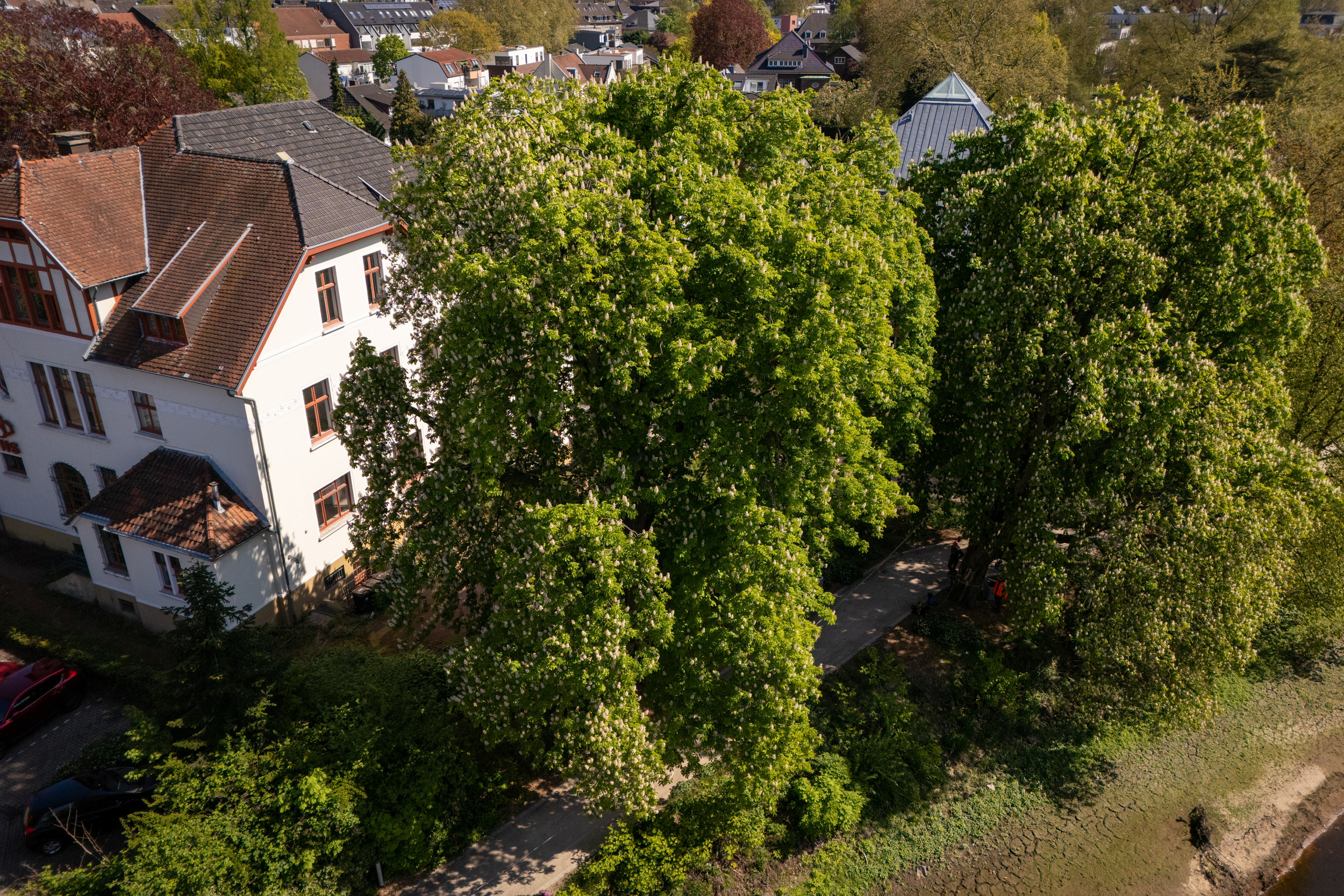
The two horse chestnut trees at the former VHS building were inspected by experts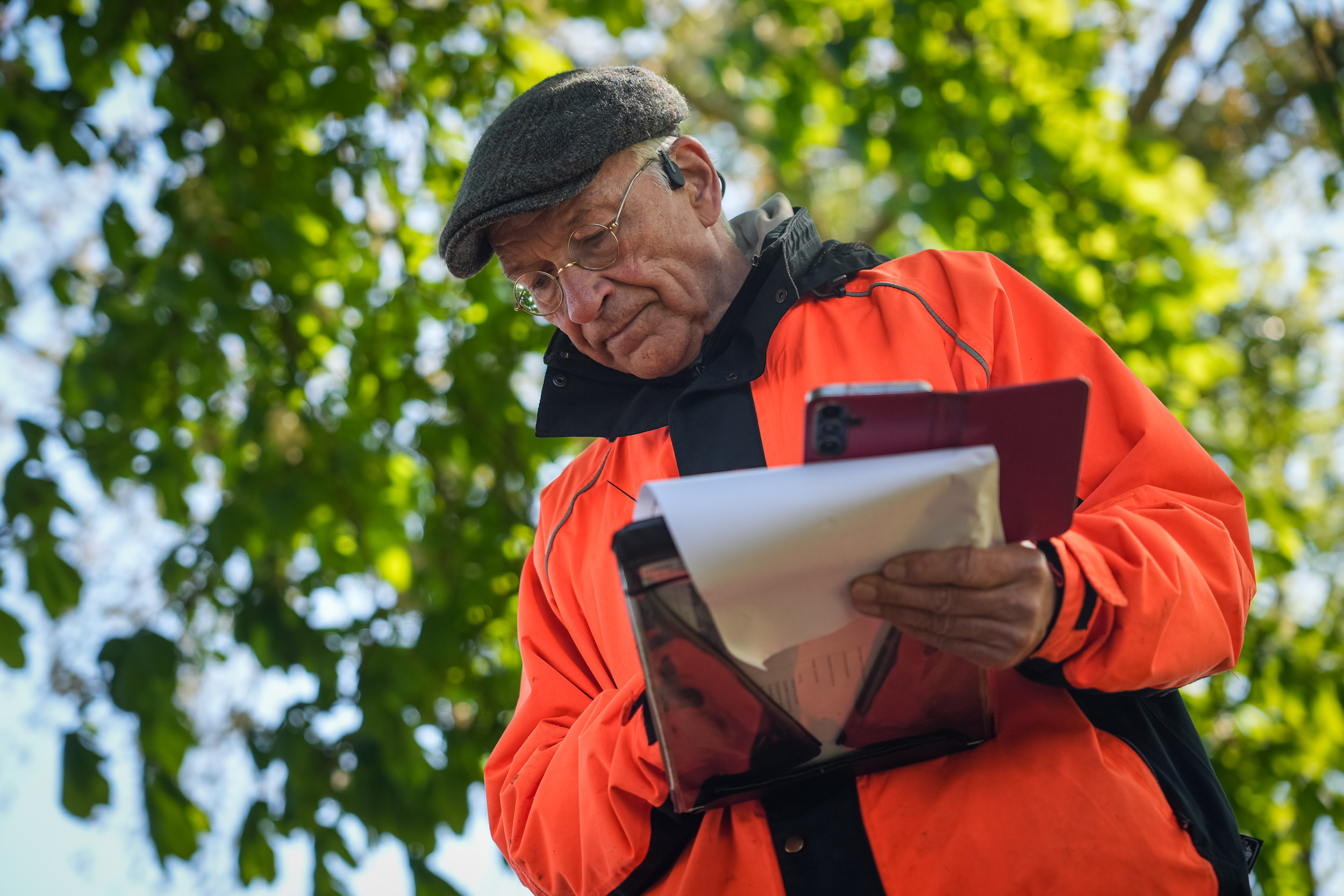
© Stadt Bocholt
Agricultural engineer Jörn Benk transfers the values to a list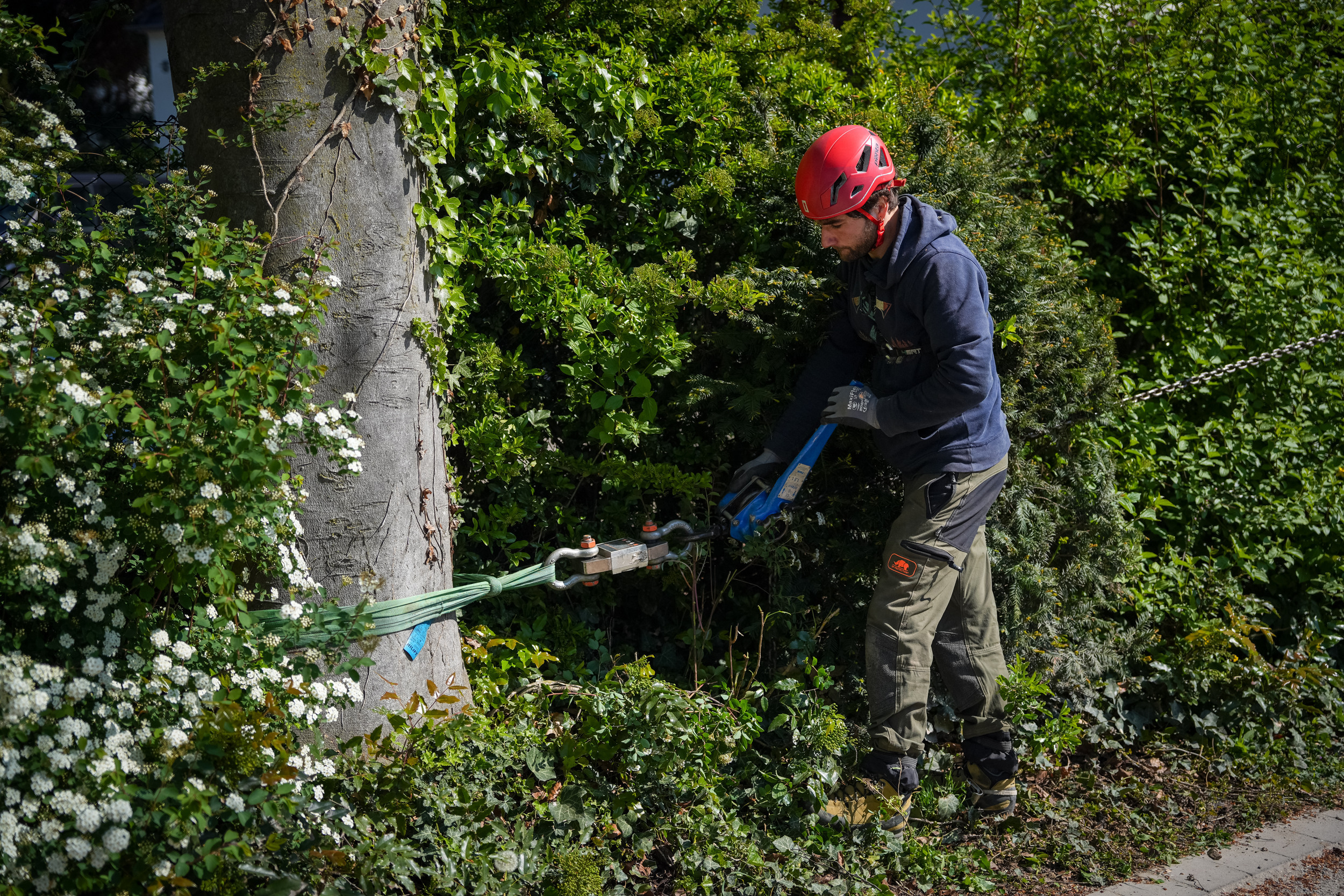
© Stadt Bocholt
Tree climber Jonas Held increases the tensile load, which simulates the hurricane load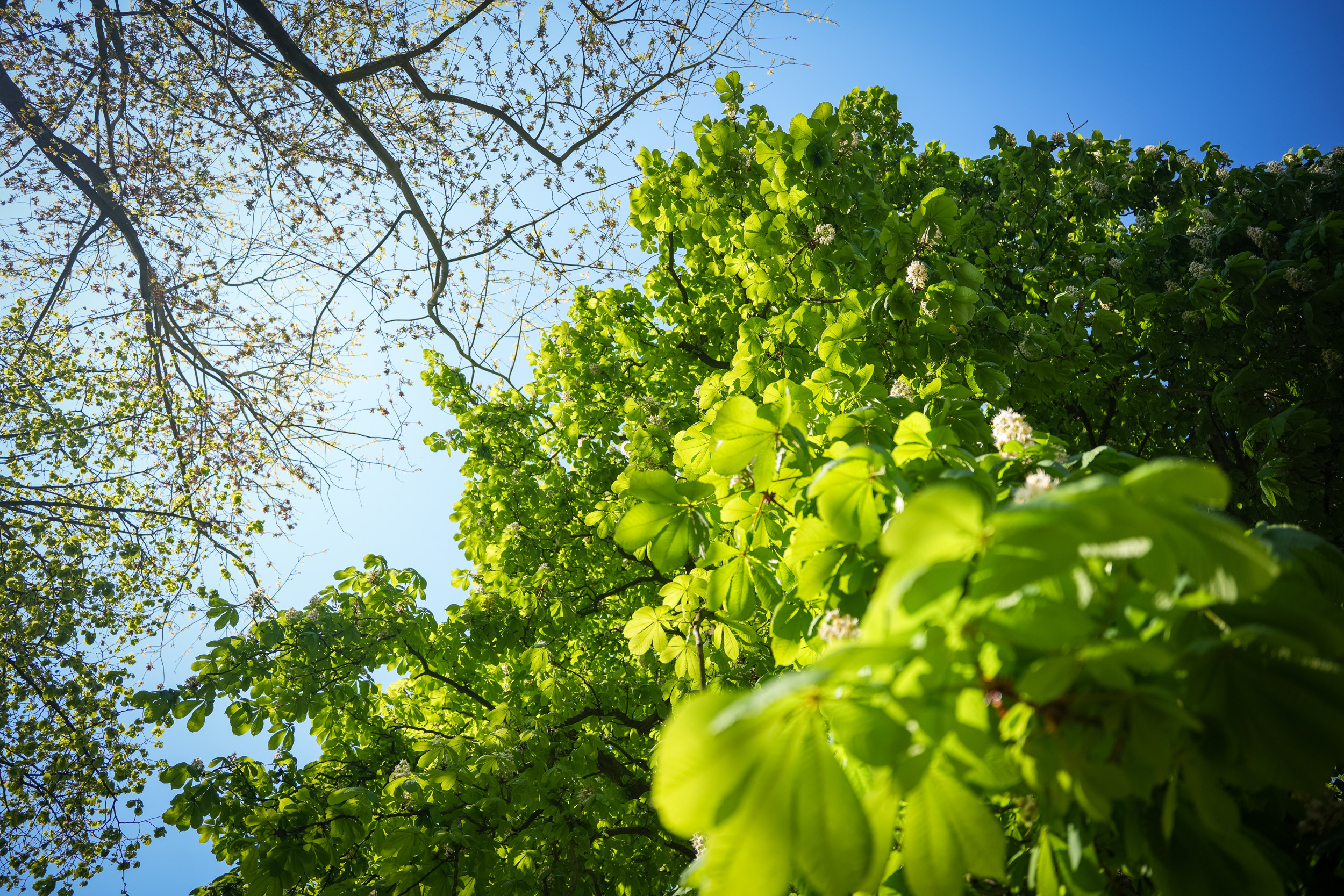
© Stadt Bocholt
Horse chestnuts are lush and green - but unfortunately not very hardy, says the tree expertTrain test to secure the preservation of the chestnut trees on the Aa for the time being
City of Bocholt has experts check the stability of prominent trees
The city of Bocholt has subjected two 80-year-old horse chestnut trees on the banks of the River Aa to an extensive load test. With the help of specialised sensors, external experts examined the stability and fracture safety of the striking trees behind the former VHS building. The aim of this measure is to preserve the valuable natural objects for the cityscape for as long as possible through precise data analyses.
The preservation of urban greenery is an important priority for the city of Bocholt, which is why experts are regularly commissioned to carry out detailed vitality checks. This week, agricultural engineer Jörn Benk and his colleague Jonas Held from the Mülheim-based expert firm Standort-Baum Expertise examined the two chestnut trees on the Bocholter Aa.
They used the so-called Inclino-Elasto method, also known as the "tensile test". This form of examination provides far more precise results than a purely visual inspection by tree inspectors could achieve. In coordination with the municipal waste disposal and service company (ESB), a massive red oak tree in Bocholt's Langenbergpark was recently analysed using this method.
"In this method, a rope and a chain hoist are used to apply an artificial load to the tree that corresponds to around 25 to 30 per cent of a possible hurricane load", explains tree expert Jörn Benk. Highly sensitive sensors measure changes in the wood in the range of two thousandths of a millimetre and inclinations of one thousandth of a degree at the base of the trunk.
This data allows the experts to extrapolate the exact failure point of the tree linearly "without damaging the tree during the test", says Benk. Older horse chestnuts, such as the two specimens on the Aa, are often unstable earlier than oaks or lime trees, for example, due to their softer wood and lower resistance to wood-decaying fungi, explains the expert.
As the experts can guarantee the stability for a certain period of time - provided the measured values are positive - this procedure actively contributes to saving trees that would otherwise have had to be removed out of sheer caution. The chestnut trees at this location were successfully tested in this way three years ago and have been preserved to this day.
The results of the current measurement now form the basis for future maintenance planning. Should the trees no longer be able to withstand extreme weather events, targeted pruning in the tree crown can reduce the load transfer in windy conditions and thus restore safety for citizens.
The expert appraisal is an important tool for finding a sustainable solution to the trade-off between the need for road safety and the desire to preserve historical natural monuments in the urban area.
© Stadt Bocholt
The two horse chestnut trees at the former VHS building were inspected by experts© Stadt Bocholt
Agricultural engineer Jörn Benk transfers the values to a list© Stadt Bocholt
Tree climber Jonas Held increases the tensile load, which simulates the hurricane load© Stadt Bocholt
Horse chestnuts are lush and green - but unfortunately not very hardy, says the tree expert